One Day Yelp Review Alerts for Owners: Pay Only If Removed
One Day Yelp Review Alerts for Owners: Pay Only If Removed ! Decorative title card for Yelp review alerts Yelp review alerts work best as a two-part system: real-time monitoring to catch new reviews the moment they post, and a clear escalation path for the ones that are fake, defamatory, or coordinated.
One Day Yelp Review Alerts for Owners: Pay Only If Removed
Yelp review alerts work best as a two-part system: real-time monitoring to catch new reviews the moment they post, and a clear escalation path for the ones that are fake, defamatory, or coordinated. Claim your Yelp business page, turn on notifications, respond publicly within a day, flag anything that violates Yelp’s content policy, and bring in an attorney or a service like Repvive the moment you’re dealing with clear falsity, threats, or a pattern of manipulated reviews.
TL;DR:
- Real-time monitoring tools can significantly reduce the detection time for new Yelp reviews, enabling faster responses to potential issues.
- Flagging reviews for policy violations should include specific evidence, such as dates and receipts, to increase the chances of removal.
- Legal removal typically involves building a case with concrete evidence, filing subpoenas, and paying only after confirmation of review removal.
- Response templates should be prepared in advance to avoid reactive, potentially damaging comments when managing reviews publicly.
- Effective review management combines proactive monitoring, strategic responses, and legal escalation only for clear falsities or threats.
Table of Contents
- How Do Yelp Review Alerts and Monitoring Actually Work?
- Setting Up Yelp Review Alerts in One Day
- When Should You Flag a Yelp Review Instead of Escalating Legally?
- What Legal Options Exist for Fake or Defamatory Yelp Reviews?
- What Does an Attorney-Led Yelp Review Removal Service Actually Do?
- How Long Does Removal Take, and What Does It Cost?
- How Should You Respond Publicly While You Investigate?
- Balancing Monitoring, Remediation, and Legal Escalation
- Get Attorney-Led Yelp Review Removal Without the Legal Bill Upfront
- Sources
- FAQ
How Do Yelp Review Alerts and Monitoring Actually Work?
Yelp notifies business owners through the Business Dashboard and, if you’ve opted in, email. That’s the native system, and it’s functional but limited.
Yelp’s recommendation software also decides which reviews count toward your visible star rating in the first place. The algorithm weighs signals like account age, reviewer activity history, and IP patterns before deciding whether a review gets “recommended” or filtered into the hidden section most customers never see. A one-star review from a brand-new account with no other activity might get buried automatically. A different one, from an active local reviewer, will not.
The gap is speed and visibility. Yelp’s own alerts can lag, and the dashboard doesn’t always make it obvious when something new lands, especially if you’re checking one platform among five. That’s why most multi-location or high-review-volume businesses layer in a dedicated monitoring tool. A solid setup gives you:
- Real-time email or SMS notifications the moment a review posts
- One central inbox instead of five separate logins
- Tagging or flagging for reviews that need a legal look versus a simple reply
A centralized alert system that pulls from multiple platforms cuts detection time significantly compared to manually checking each site, which matters because early response is often what keeps a bad review from spiraling.
Setting Up Yelp Review Alerts in One Day
You don’t need a week to get this running. Here’s the order that actually works:
- Claim and complete your Yelp for Business page at biz.yelp.com if you haven’t already. An unclaimed or half-filled profile is the first thing that makes fake reviews harder to fight.
- Turn on email and SMS notifications in your dashboard settings, and get in the habit of checking the Support/Business section daily rather than waiting for a ping.
- Add a third-party monitoring tool or a single dashboard that tracks Yelp alongside Google, Facebook, and other platforms, so you’re not toggling between five tabs.
- Build a simple triage flow: one person owns the inbox, you have two or three response templates ready, and anything that looks like a policy violation or a legal issue gets logged and escalated, not just replied to.
- Use passive review prompts like receipt links or QR codes at checkout instead of actively soliciting reviews, which Yelp’s filter tends to flag as manipulation.
Pro Tip: Assign review monitoring to a specific person by name, not “whoever sees it first.” Ownership without a name attached is how alerts sit unread for three days.
For a full walkthrough on building this system, see how to set up review monitoring in a single day.
When Should You Flag a Yelp Review Instead of Escalating Legally?
Yelp will investigate reviews that violate its Content Guidelines, and it notifies you once a moderator makes a decision. That covers a specific, narrow set of cases:
- Privacy violations, like doxxing an employee by name
- Direct threats or harassing language
- Reviews from someone who was never a customer
- Explicit false factual claims you can back with evidence (a review claiming a health code violation that never happened, for example)
Opinions don’t qualify, even harsh ones. “Worst service I’ve ever had” is protected commentary. “They served me expired meat and I have the receipt from the same day proving I wasn’t even there” is a factual claim you can dispute. When you flag a review, attach specifics: dates, transaction records, anything that shows the claim is demonstrably false. Vague flags get vague outcomes.
If you’re seeing a burst of similar reviews in a short window, from accounts with no other activity, that’s a pattern worth treating as a coordinated attack, not an isolated complaint, and it usually needs legal escalation rather than another flag.
What Legal Options Exist for Fake or Defamatory Yelp Reviews?
Section 230 of the Communications Decency Act generally shields Yelp from liability for what its users post. That means your defamation claim, in almost every case, has to target the reviewer, not the platform. This trips up a lot of business owners who assume they can sue Yelp directly for hosting a damaging post.
The practical path looks like this:
- Identify the reviewer. If the review is anonymous, your attorney typically files a John Doe complaint with a subpoena request, which can compel Yelp to release identifying account data if it has any on file.
- Meet the evidentiary bar. Courts generally require a prima facie showing that the statements are false before approving that subpoena, and the reviewer usually has to be given notice and a chance to object.
- Build the record. Transaction logs, appointment records, timestamped communications, and witness statements are the evidence that actually moves these cases forward.
- Get a judgment. Yelp’s stated policy is to honor valid court orders and judgments against a reviewer, though how the order is framed matters. The Hassell v. Bird case is the cautionary example here: California’s courts wrestled for years over whether a judgment against an anonymous reviewer could compel Yelp itself to remove the post, and Section 230 and due process concerns complicated enforcement even after the business won.
That case is worth knowing because it shows removal isn’t automatic just because you win in court. The order has to be structured correctly from the start.
What Does an Attorney-Led Yelp Review Removal Service Actually Do?
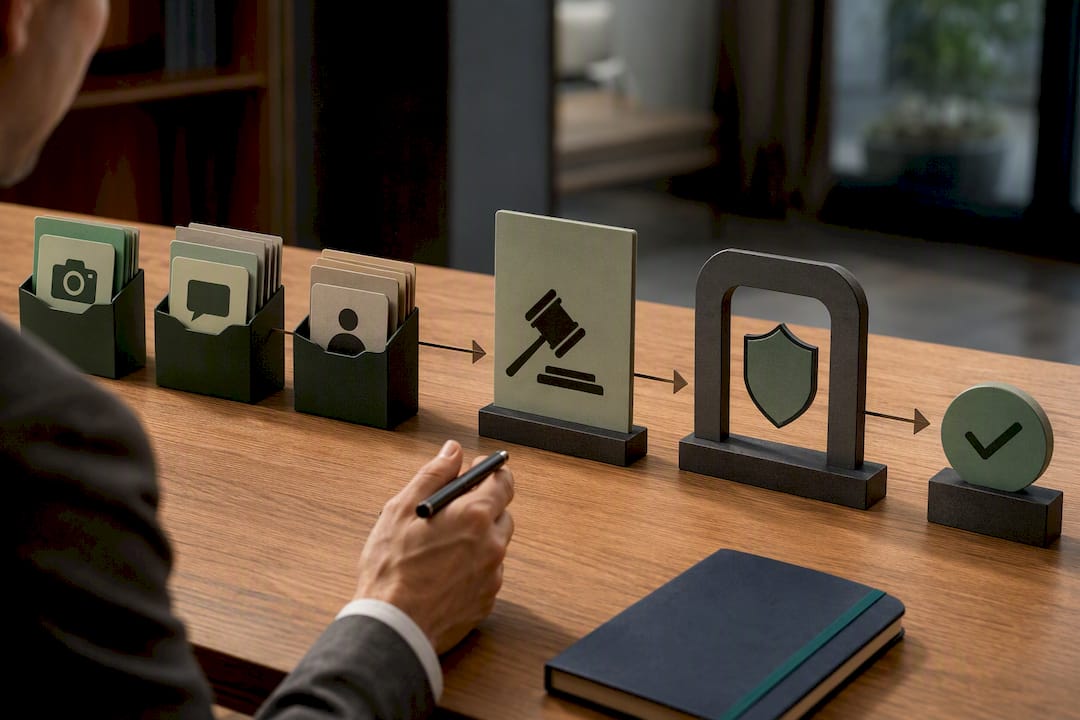
The workflow is more structured than most business owners expect, and it starts before anyone contacts Yelp. Intake comes first: you hand over the review, screenshots, and any supporting records. From there, a legal team reviews the evidence for whether it meets the bar for a false-statement or policy-violation claim.
Once that’s confirmed, the process typically runs:
- Intake and evidence review to confirm the review has a legal basis for removal
- Legal claim drafting tailored to the specific statements in that specific review, not a generic template
- Direct outreach or subpoena, using legal channels most small businesses can’t access on their own
- Removal, billed only after it’s confirmed and approved by the platform
That last point is the structural difference between this and traditional reputation management: a pay-per-removal, no-upfront-fee model means you’re not paying an hourly rate to chase something that might not work. You pay when the review is actually gone.
Pro Tip: Keep your evidence organized before you ever contact an attorney. A folder with dates, receipts, and screenshots cuts intake time from days to hours.
Attorney involvement also increases leverage. A demand letter or subpoena request from a law firm carries different weight with a platform than a customer-service flag ever will, and it’s the mechanism that can eventually produce a court order Yelp will act on. Even then, some requests still meet resistance, which is why visibility work, responding well, encouraging real reviews, stays part of the plan even during a legal escalation.
How Long Does Removal Take, and What Does It Cost?
Detection speed and resolution speed are two different clocks, and mixing them up is where business owners get frustrated. A monitoring dashboard can flag a new review within minutes. Yelp’s own moderation review, once you flag something, typically runs days to weeks. Legal escalation, subpoenas and John Doe filings, runs weeks to months depending on the court’s docket and the jurisdiction, though a default judgment (when the reviewer never responds) can move faster.
| Path | Typical Timeline | Typical Cost Range |
|---|---|---|
| Native Yelp flagging | Days to weeks | Free |
| Third-party monitoring subscription | Real-time detection | Monthly subscription fee |
| Attorney-led pay-per-removal | Weeks | Paid only on confirmed removal |
| Full litigation (subpoena + judgment) | Weeks to months | Hourly legal fees, case-dependent |
Clear policy violations, like a threat or an obvious non-customer post, tend to resolve fastest. The slow, expensive cases are the factual disputes where it’s essentially one person’s word against another’s, and that’s exactly where solid evidence up front makes the biggest difference in how fast things move.
How Should You Respond Publicly While You Investigate?
Keep the public reply short and non-defensive. Something like: “We take this seriously and would like to understand what happened. Please reach out to us directly at [contact].” That’s it. You’re inviting a private conversation, not litigating the review in the comments.
Move the actual fact-finding to a private message, where you can ask questions and, in some cases, request a voluntary deletion once you’ve clarified what happened.
- Never admit to specific facts publicly that you haven’t verified.
- Never threaten the reviewer in writing, even informally, since that can create its own liability.
- Pair every response with proactive visibility work: genuine reviews from happy customers dilute the impact of one bad post far faster than arguing with it does.
Pro Tip: Draft two or three response templates in advance so you’re never typing a reply while angry. That’s when businesses say something they regret.
For specific language you can adapt, Repvive’s guide on responding to a defamatory review walks through real examples.
Balancing Monitoring, Remediation, and Legal Escalation
Most businesses over-invest in one side of this equation and under-invest in the other. They either obsess over legal removal for every mediocre review, or they ignore monitoring entirely until a defamatory post has been live for three weeks and already cost them bookings.
The right default is prevention: consistent monitoring, a fast public response, and genuine review collection to keep your rating resilient. Visibility strategies that offset a handful of bad reviews are usually cheaper and faster than chasing removal on borderline cases. Save legal escalation for what it’s actually built for: clear falsity, threats, or coordinated attacks where no amount of good responses fixes the underlying problem.
— Jason
Get Attorney-Led Yelp Review Removal Without the Legal Bill Upfront
There are services that provide an alternative to hiring a law firm by the hour when a fake or defamatory Yelp review is actually costing you customers. You pay nothing until a review is confirmed removed, which means you’re not gambling hourly legal fees on a claim that might not clear the bar.
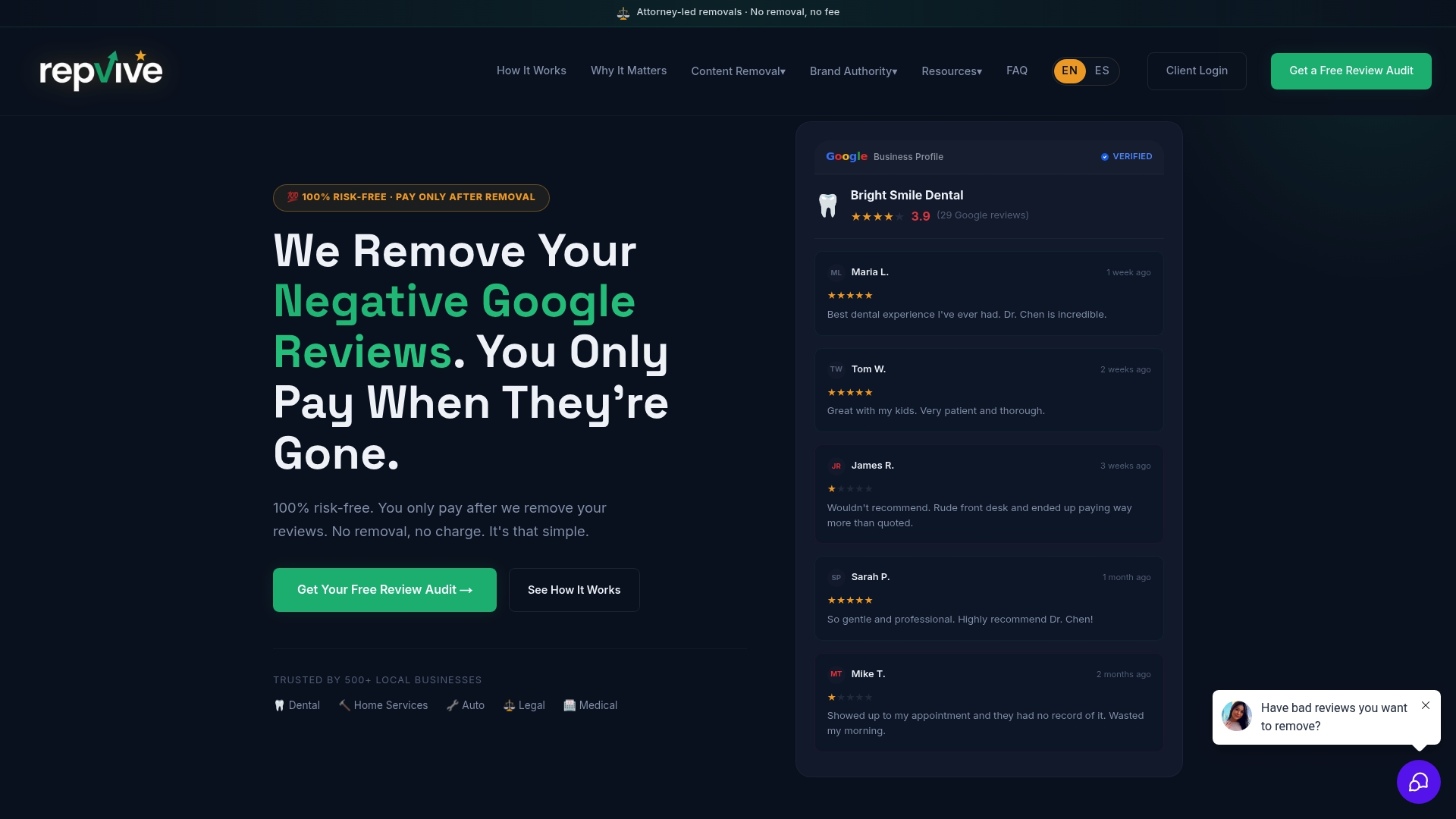
The intake process starts with an evidence checklist, screenshots, dates, and anything showing the review is false or policy-violating, followed by a legal review of whether it qualifies for a claim. Some teams handle the direct outreach and, when necessary, the legal channels that get a platform to actually act, across Yelp, Google, Facebook, and more than 20 other sites. If a fake review has been sitting on your Yelp page and native flagging hasn’t worked, start a free case review at Repvive to find out whether it qualifies for removal.
This article is general information, not a substitute for advice from a qualified lawyer. Consult a qualified legal professional about your own circumstances before acting on anything here.
Sources
- Will Yelp remove a false or defamatory review? | Support Center | Yelp
- Can I Sue Yelp for Defamation? - FindLaw
- Hassell v. Bird — California Supreme Court excerpts (analysis)
- Managing negative online reviews — University of Florida
FAQ
Can I get instant alerts when a new Yelp review posts?
Yelp’s own dashboard sends notifications, but they can lag. A dedicated monitoring tool gives you closer to real-time email or SMS alerts across Yelp and other platforms at once.
Will Yelp remove a fake review if I flag it?
Yelp investigates flagged reviews against its Content Guidelines and will notify you of the outcome, but it only acts on clear policy violations, not simply negative opinions.
Can I sue Yelp directly for a defamatory review?
Generally, no. Section 230 shields Yelp from liability for user posts, so a defamation claim almost always has to target the reviewer, not the platform.
How does an attorney-led removal service like Repvive work?
Repvive’s legal team reviews your evidence, drafts a customized legal claim, and pursues direct outreach or legal channels to get the review removed, billing only after a successful removal.
What’s the fastest way to identify an anonymous Yelp reviewer?
An attorney typically files a John Doe subpoena request, which requires showing the review is likely false before a court will compel the platform to release any identifying data it has.