How to Respond to a Defamatory Review: 2026 Guide
Responding to a defamatory Google review requires two things before anything else: documentation and restraint. Google removes reviews only when they...
TL;DR:
- Responding to defamatory reviews requires documenting evidence and maintaining restraint to avoid legal pitfalls.
- Public replies should be brief, factual, and aimed at future customers, avoiding threats and accusations.
How to respond to a defamatory review the right way
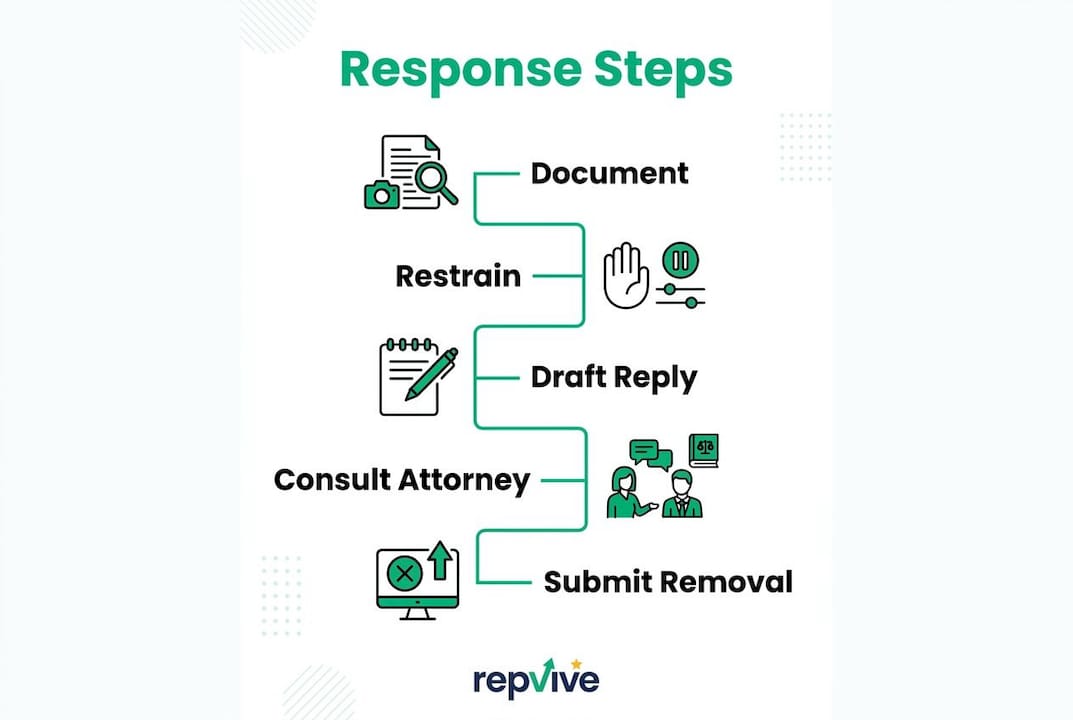
Responding to a defamatory Google review requires two things before anything else: documentation and restraint. Google removes reviews only when they violate specific content policies, not simply because they are false. That distinction shapes every decision you make from the moment you spot the review.
Your first move is to treat the initial 24 hours as a documentation window. Screenshot the review with the URL, timestamp, and reviewer profile visible. Save everything before responding or reporting, because courts and Google both require concrete evidence, not just your word against the reviewer’s.
What Google actually removes:
- Spam or fake accounts with no purchase history
- Impersonation of another person or business
- Unsubstantiated allegations of criminal or unethical conduct
- Content referencing products or services you do not offer
What Google will not remove:
- Harsh but honest opinions from real customers
- Negative experiences that are factually accurate
- Reviews you simply disagree with
The FTC’s Consumer Review and Testimonials Rule, effective 2024, prohibits threatening or coercing reviewers to remove content. You can threaten legal action only when you have a legitimate, evidence-backed basis. Groundless legal threats carry federal liability.
For anonymous reviewers, a John Doe lawsuit lets you subpoena identifying information from Google and internet service providers. Courts apply heightened standards before ordering identification, requiring preliminary evidence and a First Amendment balancing test.
Repvive’s attorney-led team handles this entire process, from evidence gathering to direct Google channels, with a 99% removal success rate and no upfront fees.
Table of Contents
What does an effective public response actually look like?
Your public reply is read by every future customer who sees that review. Write it for them, not for the reviewer.

Keep the response short, calm, and factual. Acknowledge that you take feedback seriously, briefly note any factual inaccuracy without making accusations, and invite the person to contact you directly. That is the entire formula.
Avoid these common mistakes:
- Threatening legal action in a public reply (triggers the Streisand Effect, amplifying the review’s reach)
- Making counter-accusations you cannot prove, which violates FTC rules
- Responding while angry, producing a reply the reviewer can screenshot and share
Pro Tip: Draft your response, then wait a full day before posting. The version you write 24 hours later is almost always better.
A public relations professional can help draft the rebuttal and publish positive content to push the defamatory review down in search results. For businesses with an identifiable reviewer, a private outreach resolving the underlying complaint sometimes leads to a voluntary edit or deletion, which is faster than any formal process.
Defamation law requires a false statement of fact causing demonstrable harm. A reviewer writing “worst experience ever” is expressing an opinion and is fully protected. A reviewer writing “they stole my deposit” when no transaction occurred is making a provably false factual claim. That distinction determines whether you pursue removal or simply respond professionally. For online review best practices that apply across industries, the principle holds the same: classify first, then act.
Repvive advises businesses on both tracks, crafting compliant public responses while simultaneously pursuing formal removal through Google’s policy channels and, when necessary, legal action.
Protect your reputation with Repvive’s attorney-led Google review removal service. No upfront fees, no generic templates.
FAQ
Can I threaten legal action in my public response?
Only if you have a legitimate, evidence-backed basis. The FTC prohibits groundless legal threats used to pressure reviewers into removing content.
Will Google remove a review just because it is false?
No. Google enforces its content policies, not defamation law. Removal requests must be tied to a specific policy violation and supported with documentary evidence.
How do I identify an anonymous reviewer?
A John Doe lawsuit allows you to subpoena Google and internet service providers for identifying information, subject to court approval and a First Amendment balancing test.
What if Google rejects my removal request?
Submit a one-time appeal through the Reviews Management Tool with your full evidence package. If that fails, a court order finding the review defamatory is one of the most reliable paths to removal.
Key Takeaways
Responding to a defamatory Google review requires documented evidence of a policy violation, a calm public reply written for future customers, and legal action calibrated to the specific reviewer and harm.
| Point | Details |
|---|---|
| Document before acting | Screenshot the review with URL and timestamp within the first 24 hours. |
| Google removes policy violations, not falsehoods | Frame every removal request around a specific content policy, not just factual inaccuracy. |
| FTC rules limit your response | Threats and false counter-accusations in public replies carry federal liability under the 2024 rule. |
| Anonymous reviewers can be unmasked | A John Doe lawsuit and subpoena process can identify the reviewer through Google or their ISP. |
| Repvive offers attorney-led removal | Their process achieves a 99% success rate with no upfront fees for small and medium businesses. |