Confidentiality Risk in Review Responses: 2026 Guide
The most common trigger is the instinct to defend. A reviewer posts a complaint, and the business owner wants to set the record straight. That correction...
TL;DR:
- Responding publicly to reviews risks revealing sensitive or protected information, which can lead to legal penalties and damage reputation. Business owners must avoid confirming review details, especially regarding health, personal, or proprietary data, and instead direct reviewers to private channels. Using pre-approved templates and human review helps ensure compliance and protect confidential information in all responses.
Confidentiality risk in review responses is the danger that a public reply to an online review inadvertently discloses sensitive or protected information, triggering regulatory penalties and lasting reputational harm. Privacy law experts call this “impermissible disclosure,” and it applies to any business that handles personal data, not just healthcare providers. Enforcement cases show violations occur when businesses include treatment details, insurance information, or patient names in public replies. Business owners and marketing professionals who manage review responses need to understand what is confidentiality risk in review responses before drafting a single word of a public reply.
What is confidentiality risk in review responses?
Confidentiality risk in review responses is the unintended disclosure of protected or sensitive information through a public reply. The industry term for this exposure is “impermissible disclosure,” a standard defined under HIPAA and reinforced by state-level privacy statutes. The risk is not limited to healthcare. Any business that stores customer names, financial records, purchase history, or service details faces this exposure when responding publicly.

The most common trigger is the instinct to defend. A reviewer posts a complaint, and the business owner wants to set the record straight. That correction, however, often requires confirming details the reviewer shared, and that confirmation is the violation. Enforcement cases involving Elite Dental and New Vision Dental illustrate this precisely. Both practices responded to negative reviews by referencing patient treatment details, and the Office for Civil Rights (OCR) at the U.S. Department of Health and Human Services (HHS) treated those responses as HIPAA violations.
The risk extends beyond healthcare. Legal experts warn that disclosing private internal data, such as staff names or financial arrangements, in a public reply can expose a business to defamation claims and privacy litigation. The public nature of review platforms means any disclosure becomes a permanent, indexed record.
Common types of sensitive information in review replies
The categories of information that create confidentiality concerns in reviews fall into three groups.
- Protected health information (PHI): Patient names, diagnoses, treatment dates, medications, and insurance details all qualify as PHI under HIPAA. Confirming any of these in a reply is a federal violation.
- Personal customer data: Purchase history, account numbers, billing disputes, and contact details are protected under state privacy laws including the California Consumer Privacy Act (CCPA).
- Relationship confirmation: Simply confirming a reviewer visited your clinic or used your service can constitute a breach, even if no other details are shared.
Pro Tip: Write every review response as if a regulator will read it tomorrow. If the reply confirms anything about the reviewer’s identity or history with your business, rewrite it.
How do regulatory frameworks affect review response practices?
HIPAA is the most cited regulation in review response compliance, but it is not the only one. The HIPAA Privacy Rule prohibits covered entities from disclosing PHI in any public forum without patient authorization. That prohibition applies to review platforms like Google, Yelp, and Healthgrades.
The OCR has pursued enforcement actions specifically tied to review responses. The Elite Dental Associates case and the New Vision Dental case both resulted from practices that responded to patient reviews by disclosing PHI. These cases established a clear precedent: the fact that a patient disclosed their own information first does not give the provider permission to confirm or expand on it. The HIPAA principle is “never confirm or deny” a reviewer’s identity or treatment, even when the reviewer has already made details public.
Beyond HIPAA, state privacy laws create parallel obligations. The CCPA gives California consumers the right to restrict disclosure of their personal information. Similar statutes exist in Virginia (VCDPA), colorado (CPA), and Connecticut (CTDPA). A business that responds to a review by referencing a customer’s purchase history or account status may violate one or more of these laws.
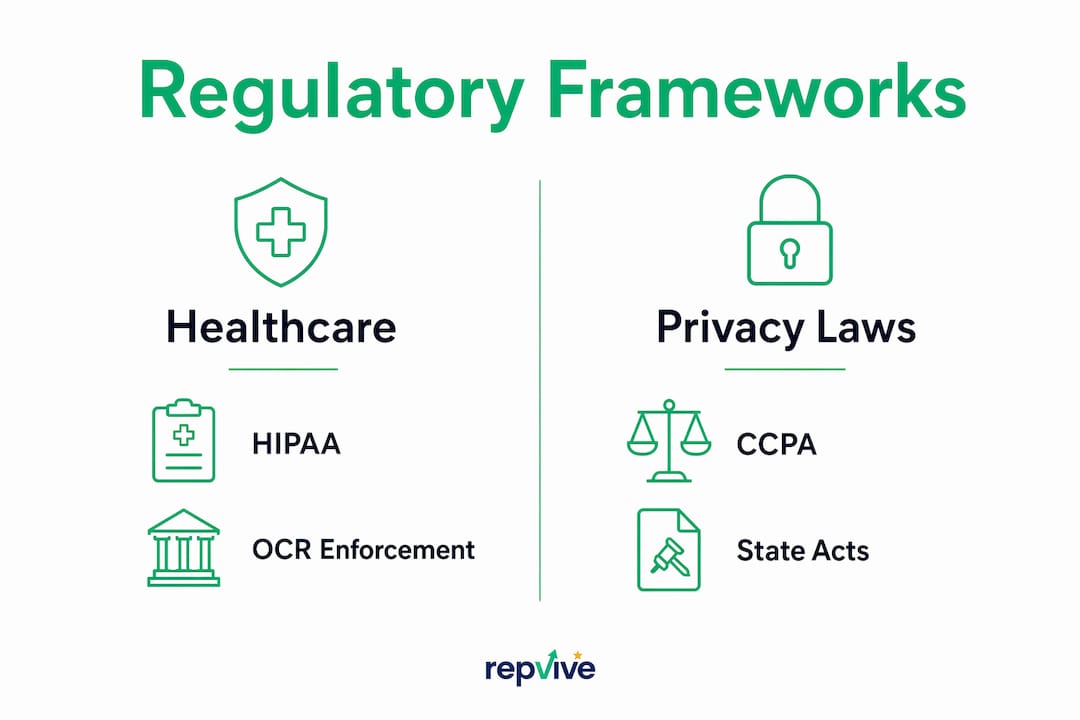
The table below summarizes the key regulatory frameworks and their core requirements for review responses.
| Regulation | Applies to | Core requirement for review responses |
|---|---|---|
| HIPAA Privacy Rule | Healthcare providers, insurers, business associates | Never disclose PHI in public replies; redirect to private channels |
| CCPA | Businesses serving California consumers | Do not reference personal data without consumer consent |
| VCDPA / CPA / CTDPA | Businesses in Virginia, Colorado, Connecticut | Restrict public disclosure of personal consumer data |
| FTC Act Section 5 | All U.S. businesses | Avoid deceptive or misleading public statements about customers |
The impact of confidentiality on review responses is not theoretical. Fines, consent decrees, and reputational damage from enforcement actions are well documented. Treating every public reply as a potential compliance document is the correct posture.
What are best practices to protect confidentiality in feedback responses?
The safest response strategy is one that acknowledges the reviewer without confirming any details about them. MedPro Group recommends that high-risk industries post a pre-approved disclaimer and direct customers to a private channel rather than engaging with specifics in public. This approach avoids the “reply trap” entirely.
For businesses across all industries, the following protocol reduces confidentiality risk in review responses.
- Use generic, empathetic language. Acknowledge the reviewer’s experience without referencing any specific detail. “We’re sorry to hear your visit did not meet your expectations” is compliant. “We understand your concern about your billing on March 3” is not.
- Never confirm the reviewer’s identity or relationship. Do not use the reviewer’s name, reference their account, or acknowledge that they are a customer, patient, or client.
- Direct all specifics to a private channel. Include a phone number or email address and invite the reviewer to continue the conversation privately. This protects both parties and demonstrates good faith.
- Escalate legally sensitive reviews immediately. If a review contains threats, false statements of fact, or confidential business information, route it to legal counsel before responding publicly.
- Apply human review to every response draft. AI-generated response tools cannot fully assess the compliance context of a reply. A human reviewer must approve every response in privacy-sensitive industries.
Pro Tip: Build a library of pre-approved response templates for common review scenarios. Templates reduce the risk of improvised replies that accidentally confirm sensitive details.
Managing confidentiality in customer reviews also requires monitoring. Review responses do not stay static. Public replies embed data into indexed datasets consumed by search engines and AI platforms. A disclosure made in a reply today can surface in AI-generated summaries months later. Protecting your business means treating every public response as a permanent record.
Learning how to protect business reputation online requires integrating privacy compliance into your reputation management workflow, not treating them as separate concerns.
How should businesses handle reviews that reveal confidential information?
When a reviewer discloses confidential or proprietary information in their post, the business faces a different challenge. The instinct is to respond and correct the record. That instinct is wrong. Amplifying leaked information in a public reply worsens exposure and can transform a minor leak into a documented disclosure.
The correct approach separates the public response from the legal response.
- Public posture: Post a brief, non-confirming acknowledgment. Something like “We take all feedback seriously and invite you to contact us directly” is sufficient. Do not reference the confidential content at all.
- Legal escalation: If the review reveals trade secrets, proprietary processes, or information covered by a nondisclosure agreement, pursue a takedown request through the platform and consult legal counsel about NDA enforcement or trade secret claims.
- Platform reporting: Most major review platforms have policies against publishing confidential business information. File a policy violation report alongside any legal action.
- Cross-platform monitoring: Track whether the confidential content spreads to other platforms or appears in AI-generated summaries. Early detection limits the damage.
When a reviewer exposes confidential information, your public reply is not the place to address it. A brief, neutral acknowledgment protects you legally. Everything else belongs in a private channel or a courtroom.
Businesses that handle disgruntled patient reviews face the highest stakes version of this challenge, where legal liability, privacy law, and public perception all intersect simultaneously.
Key Takeaways
Confidentiality risk in review responses requires separating public acknowledgment from private resolution, because any detail confirmed in a public reply becomes a permanent, indexed record with regulatory and legal consequences.
| Point | Details |
|---|---|
| Define the risk clearly | Confidentiality risk means disclosing protected information in a public reply, triggering HIPAA or privacy law violations. |
| Never confirm reviewer identity | Even acknowledging that someone visited your business can constitute an impermissible disclosure under HIPAA. |
| Use pre-approved templates | Generic, empathetic response scripts prevent improvised replies that accidentally reveal sensitive details. |
| Escalate legally, not publicly | Reviews containing confidential or proprietary data require legal action, not a detailed public rebuttal. |
| Human review is non-negotiable | AI drafting tools must be reviewed by a human before publishing in any privacy-sensitive context. |
The confidentiality trap most businesses walk right into
The most common mistake I see is not ignorance of HIPAA. It is the belief that correcting a false accusation publicly is worth the risk. Business owners feel the injustice of a bad review and want the record corrected. That impulse is completely understandable. It is also the exact psychological trap that OCR enforcement actions are built on.
The harder lesson is that reputation management and privacy compliance are not the same discipline. You can be excellent at one and terrible at the other. I have seen businesses with polished, empathetic review responses that were nonetheless riddled with compliance violations because the person writing them was focused on tone, not disclosure. The two skills need to live in the same workflow.
Automated response tools make this worse, not better. AI can produce a reply that sounds professional and empathetic while hallucinating or confirming details it should never touch. Human oversight is not optional. It is the only layer that catches what the algorithm misses.
The businesses that handle this well maintain a short library of pre-approved scripts, route anything legally sensitive to counsel before responding, and treat every public reply as a document that will be read by a regulator. That posture is not paranoid. It is correct.
, Jason
How Repvive can help you manage review risk
Confidentiality risk in review responses does not always have a clean resolution through careful wording alone. Some reviews contain false statements, fabricated details, or information that should never have been posted publicly.
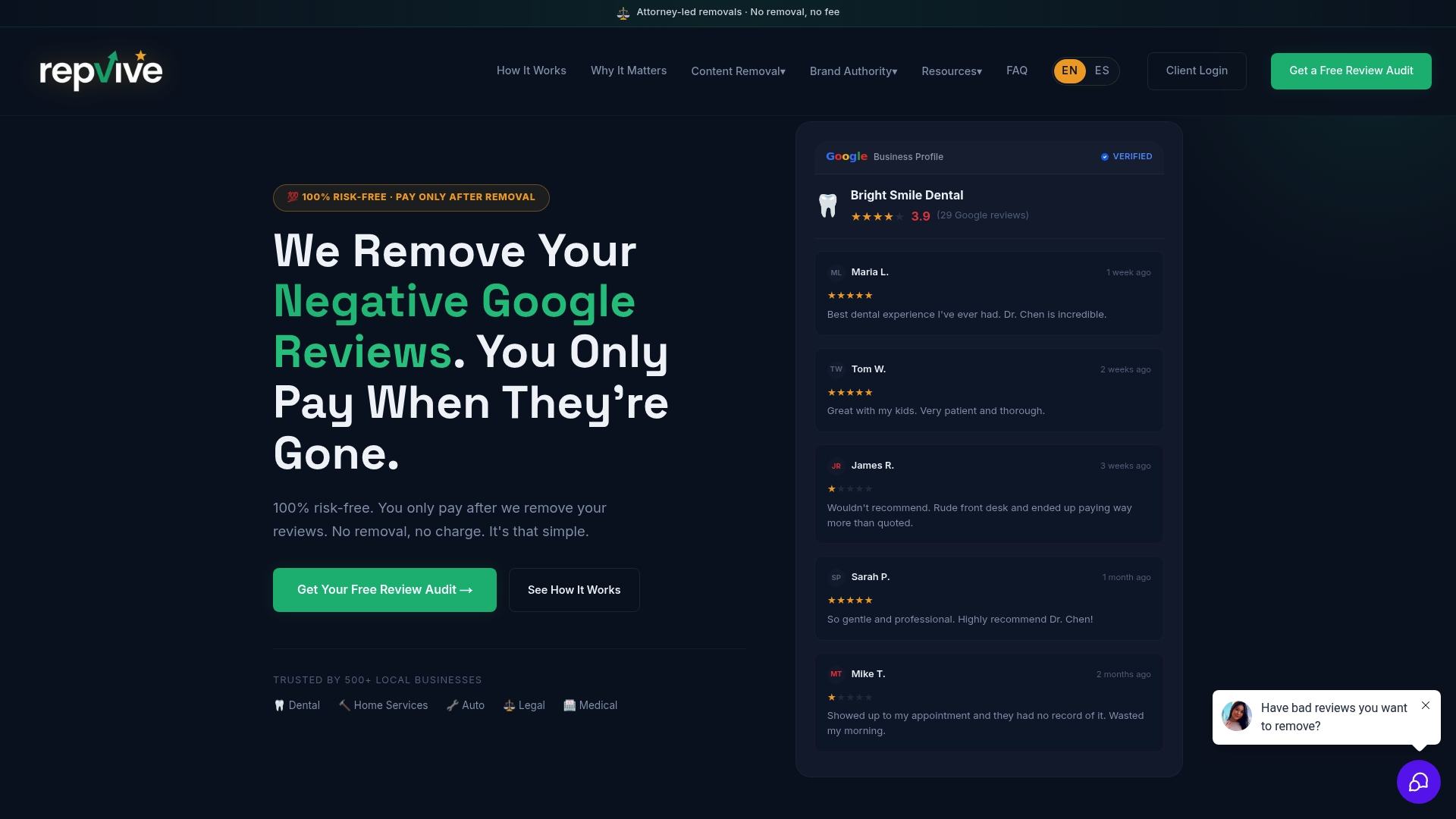
Repvive’s attorney-led review removal service addresses exactly this problem. The legal team builds a customized claim for each review and works directly with Google to secure removal, with no upfront fees and a 99% success rate. For business owners in healthcare, finance, legal services, and other privacy-sensitive industries, that means a path to removing damaging content without the compliance risk of a public rebuttal. Contact Repvive to discuss your specific situation and get a review removed the right way.
FAQ
What is confidentiality risk in review responses?
Confidentiality risk in review responses is the danger that a public reply inadvertently discloses protected or sensitive information, violating privacy regulations like HIPAA or state privacy laws. The disclosure triggers regulatory penalties and can create lasting reputational harm.
Does HIPAA apply to Google review responses?
Yes. HIPAA applies to any public disclosure of protected health information, including review platform responses. OCR enforcement actions against Elite Dental and New Vision Dental confirmed that replying to patient reviews with PHI constitutes a federal violation.
Can I mention a reviewer’s name in my response?
No. Using a reviewer’s name in a public reply can confirm their identity as a customer or patient, which constitutes an impermissible disclosure under HIPAA and may violate state privacy statutes even outside healthcare.
What should I do if a review reveals confidential business information?
Post a brief, non-confirming acknowledgment and pursue a platform takedown request alongside legal counsel. Do not reference the confidential content in your public reply, as doing so amplifies the exposure.
Are AI tools safe for drafting review responses in regulated industries?
AI tools are useful for drafting but cannot replace human review in HIPAA or privacy-sensitive contexts. A human approver must check every response before it is published to catch disclosures the AI cannot recognize as violations.
Recommended
- How to Handle a Disgruntled Patient Review Effectively | Repvive
- RepWatch: Real-Time Review Monitoring Across 20+ Platforms | Repvive
- Law Firm Reputation Management Best Practices | Repvive
- Review Removal Service & Online Reputation Management | Repvive
If you would rather have this handled, our RepWatch review monitoring reviews each case first and charges only when the content comes down.