How to Protect Business Reputation Online in 2026
Online reputation management (ORM) is defined as the practice of monitoring, shaping, and defending how your business appears across digital platforms. For...
TL;DR:
- Online reputation management involves ongoing monitoring, content creation, prompt responses, and content suppression. Small businesses should use free tools like Google Alerts and Reddit searches, then upgrade to AI-based platforms as they grow. Acting quickly and consistently helps protect reputation and prevents damage from negative online content.
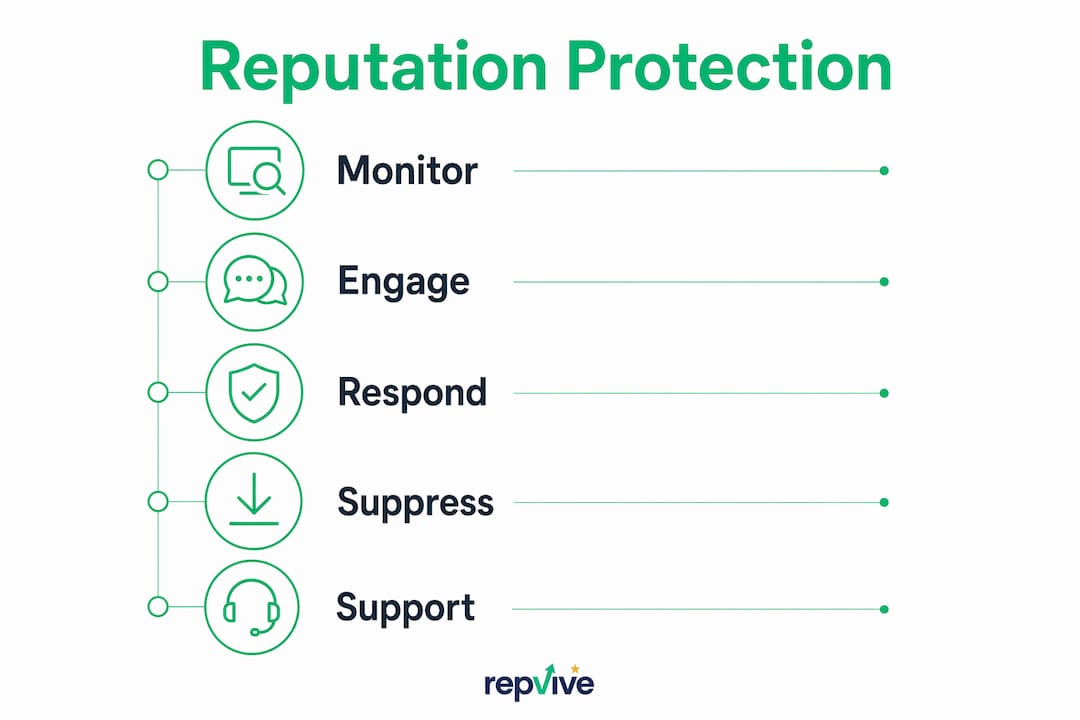
Online reputation management (ORM) is defined as the practice of monitoring, shaping, and defending how your business appears across digital platforms. For local business owners, the stakes are high. A single wave of negative reviews or a damaging search result can cost you customers before they ever walk through your door. To protect business reputation online, you need a continuous system, not a one-time cleanup. That system covers four pillars: monitoring your brand, building positive content, responding to feedback professionally, and suppressing harmful material. AI-powered search engines now synthesize multiple sources to generate brand summaries, which means your reputation lives everywhere your name appears online.
How can local businesses monitor their online reputation effectively?
Monitoring is the foundation of every ORM strategy. You cannot fix what you do not see, and problems left undetected grow fast.

Start with free tools. Google Alerts lets you track your business name, owner name, and key product terms at no cost. Set up alerts for exact-match phrases like your business name in quotes, and choose “as it happens” delivery so you catch issues early. Free tools work well for low-volume businesses with limited budgets.
As your business grows, AI-driven platforms detect sentiment spikes and alert you in real time, enabling early risk detection before a single bad thread goes viral. Platforms with social listening and sentiment analysis pull mentions from review sites, forums, news outlets, and social media into one dashboard. That kind of visibility is difficult to replicate manually.
One surface most local businesses ignore is Reddit. Google and AI search engines frequently cite Reddit discussions in their summaries, which means a critical thread about your business can appear in AI-generated answers before you even know it exists. Check Reddit monthly by searching your business name in the site’s search bar.
ORM now extends beyond Google to AI-generated summaries that influence consumer perception before a visitor ever reaches your website. Tools that track your presence in ChatGPT, Perplexity, and Google AI Overviews are worth adding to your monitoring stack. Repvive’s guide on AI reputation management covers this emerging channel in detail.
Pro Tip: Assign one person internally to own reputation monitoring. Shared responsibility means no responsibility. A weekly 15-minute review of alerts and dashboards catches most issues before they escalate.
Key monitoring actions to build into your routine:
- Set Google Alerts for your business name, owner name, and top products or services.
- Check Google Business Profile reviews every 48 hours.
- Search your business name on Reddit and major forums monthly.
- Review AI-generated summaries in ChatGPT and Perplexity quarterly.
- Use a social listening tool for real-time sentiment tracking once volume justifies the cost.
What are the best practices to build a strong online reputation?
Proactive reputation building is the most cost-effective defense you have. A strong base of positive content makes it far harder for one bad review to define your brand.
The single most effective tactic is generating genuine customer reviews consistently. Ask every satisfied customer for a review immediately after a positive experience. Timing matters. A customer who just received great service is far more likely to leave a review than one you contact a week later. Use a short, direct request: “Would you mind leaving us a Google review? It helps other customers find us.”
Content creation is the second pillar. Publishing blogs, FAQs, case studies, and expert commentary builds your authority in search results and gives AI engines positive material to cite. A successful ORM strategy must continuously build positive content to suppress negative search results over time. Each piece of quality content you publish is a long-term asset.
Here are the core steps to build your reputation proactively:
- Request reviews systematically. Build review requests into your post-purchase or post-service workflow. Email, text, or in-person requests all work. Consistency beats volume.
- Publish original content regularly. Aim for at least two blog posts or FAQs per month. Answer questions your customers actually ask.
- Claim and complete every directory listing. Google Business Profile, Yelp, bing Places, and industry-specific directories all contribute to your search footprint.
- Earn third-party mentions. Local press coverage, guest posts, and community sponsorships create credible external signals that AI engines treat as authoritative.
- Be transparent in all communications. Customers trust businesses that acknowledge limitations honestly more than those that project false perfection.
Pro Tip: Repurpose one piece of long-form content into three shorter formats: a social post, a FAQ answer, and a short video script. You triple your output without tripling your effort.
How should businesses respond to online feedback and reviews?
Response speed and tone determine whether a negative review hurts or helps you. Responding within 24 hours on prominent review platforms positively influences customer trust and business reputation. Slow or absent responses signal indifference.
Defensive or dismissive responses damage reputation more than the negative reviews themselves. Every response is public. Prospective customers read how you handle complaints just as carefully as they read the complaints themselves. A calm, human reply that acknowledges the issue and offers a resolution tells future customers you are accountable.
Negative reviews handled maturely enhance a brand’s reputation by showing accountability and customer service quality. That is a counter-intuitive truth most business owners miss. The goal is not to win the argument. The goal is to show everyone reading that you take feedback seriously.
Practical response guidelines:
- Respond to every review, positive and negative, within 24 hours.
- Thank positive reviewers by name and mention a specific detail from their experience.
- For negative reviews, acknowledge the issue, apologize sincerely, and invite the customer to contact you directly to resolve it.
- Use a calm, human tone and avoid legal or corporate language that feels cold.
- Never copy and paste a generic response. Customers and search engines both notice.
- Move detailed disputes offline. Provide a direct phone number or email in your reply.
What strategies help suppress damaging online content?
Suppression is the most misunderstood part of ORM. Most business owners assume the goal is deletion. The real goal is outranking. You push harmful pages off the first page of search results by filling that space with stronger, more authoritative content.
Suppressing a harmful page can take 6, 12 months of consistent SEO and link-building efforts. That timeline is not a flaw in the strategy. It reflects how search engines work. Consistent output beats sporadic bursts every time.
| Suppression method | Best for | Typical timeline |
|---|---|---|
| SEO content creation | Outdated or low-authority negative pages | 6, 12 months |
| PR and earned media | Reputation gaps in news results | 3, 6 months |
| Reddit engagement | Negative forum threads | 2, 8 weeks |
| Platform removal request | Policy-violating reviews or posts | Days to weeks |
| Legal counsel | Defamatory or false editorial content | Varies |
For Reddit specifically, engaging as a real human with your personal name and role, and acknowledging issues personally, is the most effective way to mitigate negative threads. Anonymous corporate responses get ignored or mocked. Personal accountability earns respect.
For content that is demonstrably false or defamatory, request a correction directly from the publisher. If the publisher refuses, legal counsel can assess your options. This path is slower and more expensive, but it is the right tool for genuinely harmful false claims.
Which tools best support local businesses in managing online reputation?
The right tool stack depends on your budget and the volume of mentions your business generates. A layered approach works best: start free, add paid tools as your needs grow.
Free and low-cost tools cover the basics well. Google Alerts handles brand mention tracking at no cost. Google Business Profile’s built-in review management lets you respond to reviews directly. Social media platforms have native notification systems that catch direct mentions.
Mid-tier tools add sentiment analysis, review aggregation across multiple platforms, and workflow features that save time. These platforms pull mentions from Google, Yelp, Facebook, and industry directories into a single feed. They also flag sentiment shifts so you can prioritize urgent responses.
Features worth prioritizing when evaluating any ORM tool:
- Real-time alerts for new reviews and brand mentions
- Sentiment tracking that distinguishes positive, neutral, and negative tone
- Review aggregation across Google, Yelp, Facebook, and niche directories
- Response workflow tools that let you reply from one interface
- Reporting dashboards that show reputation trends over time
AI-driven monitoring platforms detect sentiment spikes and alert in real time, which gives you a meaningful head start on any crisis. That early warning is worth the subscription cost for most businesses generating more than 50 reviews per month.
For businesses dealing with complex issues like fake reviews or defamatory content, professional services fill the gap that software cannot. Repvive’s review removal and ORM services handle escalated cases that require legal expertise and direct platform channels.
Key Takeaways
Protecting your business reputation online requires a continuous, four-part system: monitoring your brand, building positive content, responding to feedback within 24 hours, and suppressing harmful content through consistent SEO and professional support.
| Point | Details |
|---|---|
| Monitor across all surfaces | Track Google, social media, Reddit, and AI-generated summaries weekly. |
| Build positive content consistently | Publish blogs, FAQs, and earn third-party mentions to fill search results with accurate information. |
| Respond within 24 hours | Prompt, human replies to reviews signal accountability and build trust with prospective customers. |
| Suppress with SEO, not deletion | Outranking negative content through consistent content creation takes 6, 12 months but delivers lasting results. |
| Use professional help for complex cases | Fake or defamatory reviews often require legal expertise and direct platform channels to remove effectively. |
Why I think most businesses wait too long to act on reputation issues
The pattern I see repeatedly is this: a business owner notices a few bad reviews, decides to wait and see if they go away, and six months later is dealing with a first-page search result that is actively costing them customers. Reputation damage compounds. The longer a negative result sits unchallenged, the more authority it accumulates in search engines.
The businesses that recover fastest are the ones that treat ORM as a standing operational function, not a crisis response. They assign ownership, run weekly monitoring checks, and publish content on a schedule. They do not wait for a problem to force their hand.
The shift to AI-generated search summaries makes this even more urgent. When ChatGPT or Google AI Overviews summarize your business, they pull from every credible source they can find. If your positive content is thin and a negative thread ranks well, the AI will cite the negative thread. You cannot argue with an algorithm. You can only outpublish it.
The businesses that will thrive in this environment are the ones that treat their online presence as a living asset, not a static listing. Authenticity, consistency, and speed of response are the three traits that separate businesses with strong reputations from those constantly playing defense.
, Jason
When professional support makes the difference for your reputation
Some reputation problems go beyond what monitoring tools and content creation can fix. Fake reviews posted by competitors, defamatory content from anonymous sources, and coordinated review attacks require a different level of response.
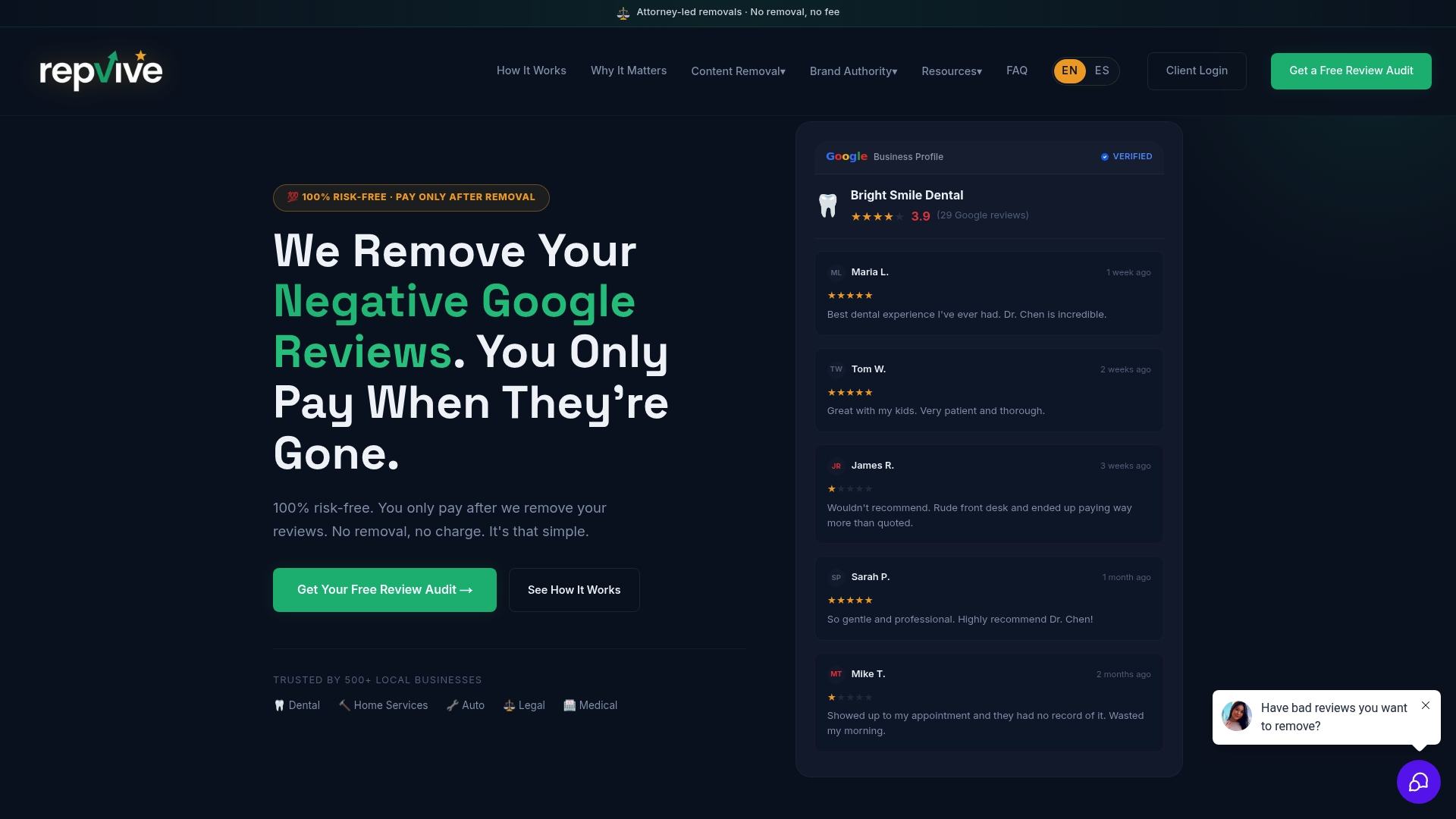
Repvive specializes in removing negative Google reviews through an attorney-led process with a 99% success rate and no upfront fees. Their legal team builds a customized case for each review and works through direct channels to get removals approved by Google. For local businesses dealing with fake or unfair reviews, that kind of targeted expertise is far more effective than generic reporting tools. If your business is facing reviews that cross the line, explore Repvive’s services to see what professional removal looks like in practice.
FAQ
What does it mean to protect your business reputation online?
Protecting your business reputation online means actively monitoring, building, and defending how your brand appears across search engines, review platforms, and social media. It is a continuous process, not a one-time task.
How long does it take to suppress a negative search result?
Suppressing a harmful search result typically takes 6, 12 months of consistent content creation and SEO work. The timeline depends on how authoritative the negative page is and how aggressively you publish competing content.
Should I respond to every negative review?
Yes. Responding to every negative review within 24 hours signals accountability and professionalism to prospective customers. A calm, specific reply that offers offline resolution consistently outperforms silence or a defensive response.
Can fake or false reviews be removed from Google?
Fake reviews that violate Google’s content policies can be removed through a formal reporting process or with legal support. Repvive’s attorney-led approach achieves removal in cases where standard reporting fails.
What free tools help monitor my online reputation?
Google Alerts tracks brand mentions across the web at no cost. Google Business Profile provides direct access to your reviews. Together, they cover the basics for most small local businesses starting their monitoring practice.