How to Handle a Disgruntled Patient Review Effectively
A disgruntled patient review is any public complaint posted by a patient that expresses dissatisfaction with care, communication, or service. Knowing how to...


A disgruntled patient review is any public complaint posted by a patient that expresses dissatisfaction with care, communication, or service. Knowing how to handle a disgruntled patient review correctly is one of the most important reputation skills a healthcare provider can develop. Responding within 24, 48 hours statistically increases average star ratings by 0.12 and generates 12% more positive reviews. That single data point shows that your response is not just damage control. It is an active driver of practice growth.
What should you prepare before responding to a disgruntled patient review?
Preparation is the difference between a response that builds trust and one that creates a liability. Before your practice replies to any negative review, three foundations must be in place: compliance knowledge, trained staff, and a monitoring system.
HIPAA compliance comes first. Every public response must avoid protected health information, which includes patient names, dates of service, diagnoses, and treatment details. Even if a patient reveals their own history in a review, your practice cannot confirm it publicly. This rule applies without exception.
Staff training is non-negotiable. The person drafting responses needs to understand tone, privacy law, and when to escalate. A non-clinical reviewer checking each response before it goes live helps catch unintentional disclosures or defensive language before they become public problems.
Real-time monitoring closes the window. You cannot respond within 24, 48 hours if you do not know a review exists. Tools like Repvive’s RepWatch track reviews across 20+ platforms and send alerts the moment a new review posts.
| Preparation area | What you need |
|---|---|
| HIPAA compliance | Written policy prohibiting PHI in all public responses |
| Staff roles | Designated responder, reviewer, and escalation contact |
| Response templates | Adaptable drafts reviewed for tone and privacy compliance |
| Monitoring system | Real-time alerts set for all major review platforms |
| Resolution authority | Staff empowered to offer refunds, follow-ups, or reappointments |
Pro Tip: Never copy-paste the same template response to every review. Patients and prospective patients both notice generic replies, and they signal that your practice does not actually read the feedback.
How should you craft a public response to a disgruntled patient review?
The L.A.S.T. framework, which stands for Listen, Apologize, Solve, and Thank, gives healthcare providers a clear structure for every public reply. Each step has a specific purpose, and skipping any one of them weakens the response.

1. Listen: Acknowledge the specific concern. Open by naming the issue the patient raised, not their emotional state. “We hear that your wait time was longer than expected” is specific. “We’re sorry you had a bad experience” is vague and forgettable. Specificity signals that you actually read the review.
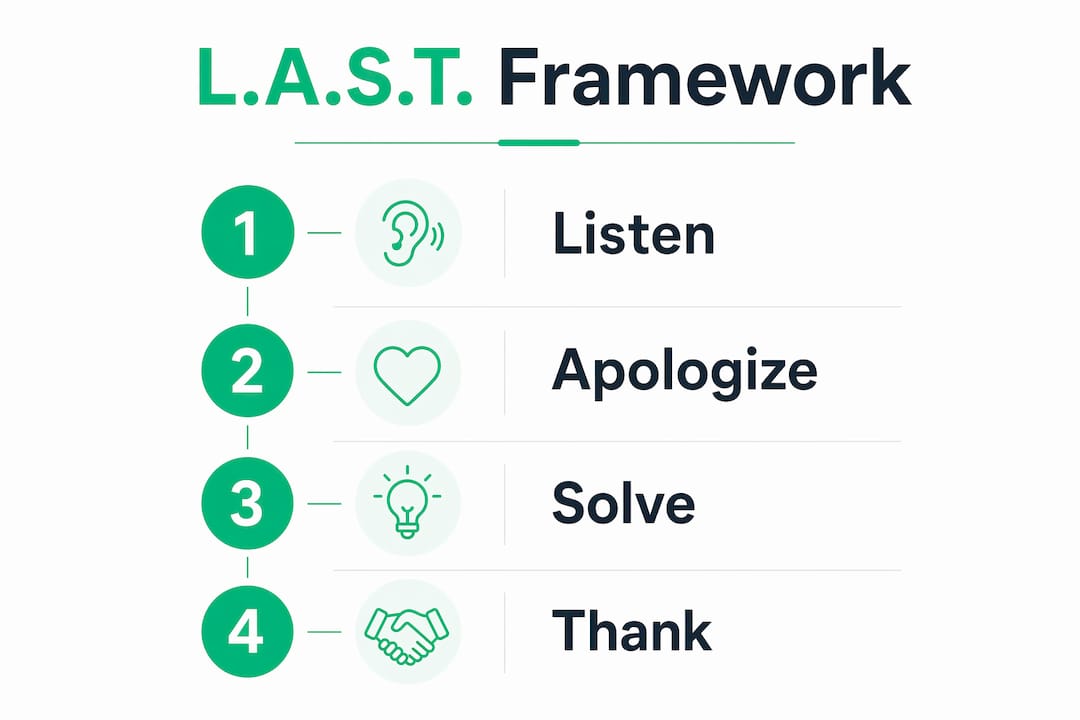
2. Apologize: Express regret for the situation. Apologize for the experience itself, not for the patient’s feelings. Phrases like “I’m sorry you feel that way” read as dismissive and often escalate frustration rather than defuse it. Say “We’re sorry this visit did not meet your expectations” instead.
3. Solve: Offer a concrete next step. Invite the patient to contact your practice directly. Include a phone number or email address in the response. This moves the conversation offline, where you have more flexibility to resolve the issue without a public audience.
4. Thank: Close with gratitude. Thank the patient for taking the time to share their feedback. This signals maturity and shows prospective patients that your practice welcomes input rather than fearing it.
Keep the response to 3, 5 sentences and maintain a calm, professional tone throughout. Longer responses risk sounding defensive, and they increase the chance of accidentally disclosing protected information.
Pro Tip: Before publishing any response, read it aloud. If it sounds like an argument, rewrite it. If it sounds like a form letter, personalize it.
A compliant, well-structured response does two things at once. It addresses the patient who left the review, and it signals to every prospective patient reading that review that your practice handles problems with professionalism. Public silence on negative reviews signals indifference and may read as an admission of guilt to anyone evaluating your practice online.
What strategies help you learn from patient feedback beyond public responses?
Responding to bad reviews is only half the work. The other half is using that feedback to fix the underlying problems. Practices that treat reviews as diagnostic data reduce negative feedback volume over time.
Start by categorizing feedback themes. Research shows that 34% of negative nurse communication reviews mention medication explanations, and 28% mention discharge instructions. Those two categories alone represent a training and process opportunity that most practices overlook.
Share aggregated themes with your team without identifying individual patients. When staff see patterns rather than isolated complaints, they engage with the feedback differently. Transforming feedback from surveillance to growth creates a positive internal culture and directly improves the patient experience over time.
Common patient feedback categories and how to act on them:
- Wait times: Audit scheduling gaps and adjust appointment buffers during peak hours.
- Medication instructions: Add a verbal confirmation step and a printed summary at discharge.
- Staff communication: Role-play difficult conversations in team training sessions.
- Billing confusion: Create a plain-language billing FAQ and review it with patients before they leave.
- Follow-up gaps: Implement a 48-hour post-visit check-in call or automated message.
Practices that build this feedback loop consistently see fewer repeat complaints in the same categories. Tools like Repvive’s RepBoost help collect and analyze patient feedback systematically, making it easier to spot trends before they become reputation problems.
How do you take the conversation offline to resolve patient complaints?
Moving a complaint offline is the fastest path to resolution. A public response invites a private conversation. That private conversation is where real service recovery happens.
Your public response should include a direct contact method, either a phone number or a dedicated email address. Do not ask the patient to “reach out through our website.” That extra step creates friction and signals that you are not fully committed to resolving the issue.
Key elements of an effective offline resolution process:
- Assign a resolution owner. One staff member should own each complaint from first contact to close. Handoffs between staff members frustrate patients who have already had a bad experience.
- Grant resolution authority. Staff without authority to offer refunds or reappointments cannot resolve complaints. They can only apologize, which escalates frustration rather than ending it.
- Document every interaction. Keep a written record of what was said, what was offered, and what the outcome was. This protects your practice legally and supports quality improvement.
- Follow up after resolution. A brief follow-up call or message after the issue is resolved shows the patient that your practice genuinely cares about the outcome.
Pro Tip: Prepare two or three resolution scripts for your most common complaint types. Scripts do not make conversations robotic. They prevent staff from saying something that makes the situation worse under pressure.
Service recovery plans that empower frontline staff with real authority are the single most effective tool for turning a dissatisfied patient into a loyal one. Empathy without action is just theater.
Key Takeaways
Responding promptly, professionally, and with a clear offline resolution path is the most effective way to handle a disgruntled patient review and protect your practice’s reputation.
| Point | Details |
|---|---|
| Respond within 24, 48 hours | Prompt replies increase star ratings and generate more positive reviews over time. |
| Follow HIPAA in every response | Never confirm patient status, names, or clinical details in any public reply. |
| Use the L.A.S.T. framework | Acknowledge, apologize for the situation, offer a next step, and thank the reviewer. |
| Treat feedback as diagnostic data | Categorize recurring themes and use them to fix operational gaps before they repeat. |
| Empower staff to resolve offline | Assign resolution authority so private follow-ups lead to real outcomes, not more frustration. |
What I’ve learned from watching practices handle reviews the wrong way
Most practices make the same two mistakes. They either ignore negative reviews entirely, or they argue with the patient in public. Both approaches destroy trust faster than the original complaint ever could.
The practices I’ve seen recover most effectively share one trait: they treat every negative review as a signal, not an attack. A patient who took the time to write a complaint is telling you something specific about a gap in your service. That information has real value if you are willing to hear it.
Over-apologizing is its own problem. Responses that are too long, too effusive, or too eager to please read as insincere. Three to five calm sentences outperform a paragraph of apologies every time. Patients want to feel heard. They do not need a speech.
The cultural shift that matters most is moving from “how do we suppress this?” to “what does this tell us?” Practices that make that shift stop dreading reviews and start using them. Their ratings improve, their staff morale improves, and their patient retention improves. The reviews did not change. The response to them did.
Consistency is the final piece. One excellent response does not build a reputation. Twelve months of calm, professional, empathetic replies do. Prospective patients read patterns, not individual posts.
, Jason
When a review goes beyond a complaint
Some negative reviews are not just unhappy feedback. They are fake, retaliatory, or factually false, and no amount of empathetic responding will fix them. That is where Repvive comes in.
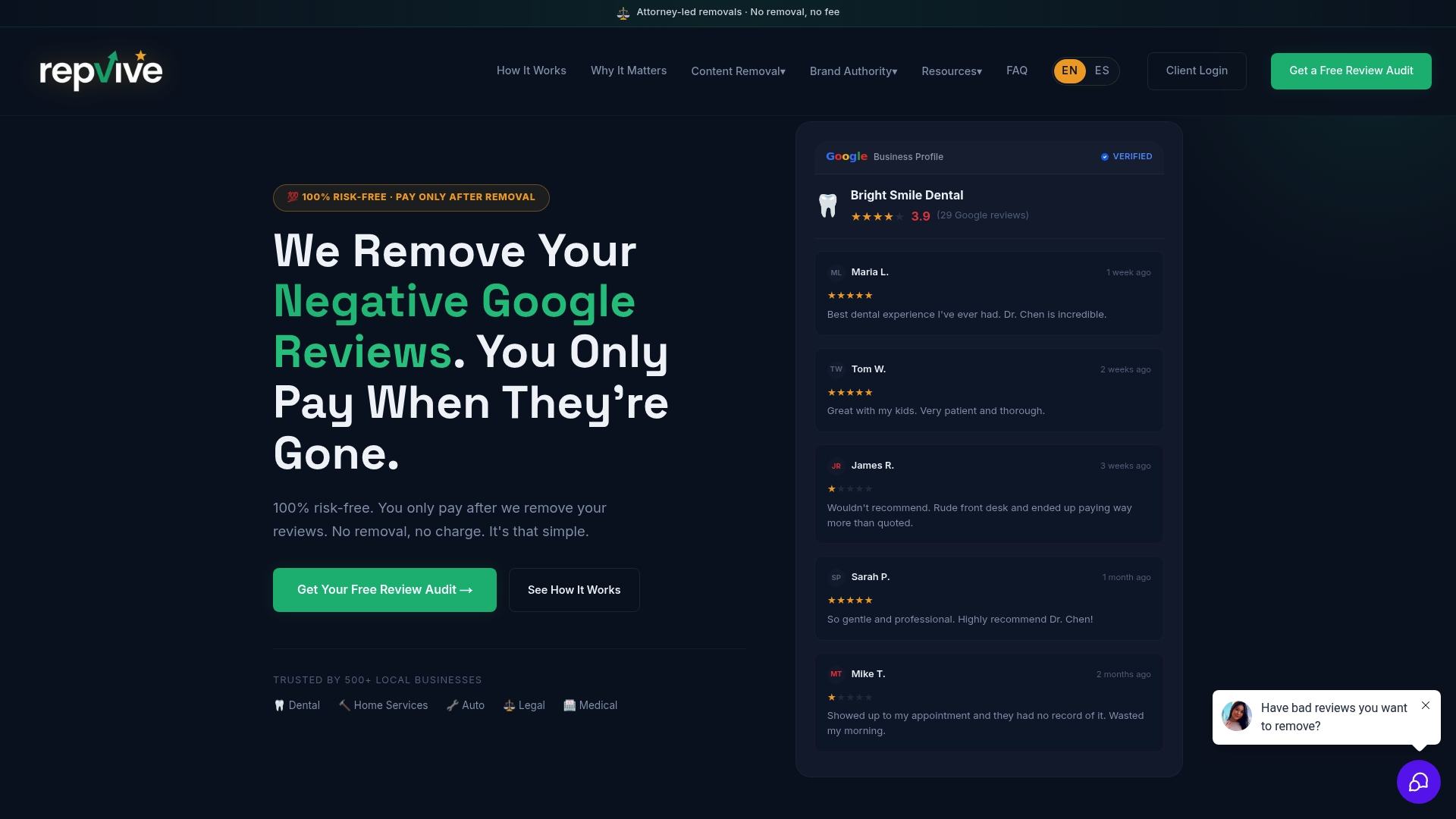
Repvive’s attorney-led review removal service targets unfair and fraudulent reviews with customized legal claims filed directly through Google’s channels. The process carries a 99% success rate and requires no upfront fees. For healthcare providers dealing with reviews that cross the line from criticism into defamation or fabrication, Repvive’s review removal service offers a legally backed path to a cleaner reputation. You can also explore Repvive’s full reputation management platform to combine removal with proactive review collection and real-time monitoring.
FAQ
How quickly should I respond to a negative patient review?
Respond within 24, 48 hours. Practices that meet this window see measurable increases in star ratings and a higher volume of positive reviews over time.
What information should I never include in a public response?
Never include the patient’s name, date of service, diagnosis, or any treatment details. HIPAA prohibits confirming protected health information in public replies, even if the patient disclosed it themselves.
What does the L.A.S.T. framework mean for review responses?
L.A.S.T. stands for Listen, Apologize, Solve, and Thank. It gives providers a four-step structure for writing responses that acknowledge the complaint, express genuine regret, offer a resolution path, and close with gratitude.
Can I ask a patient to remove a negative review after resolving their complaint?
You can invite a patient to update their review after a positive resolution, but you cannot offer incentives or pressure them to remove it. Any coercive approach violates platform terms of service and can backfire publicly.
What should I do if a negative review is fake or defamatory?
A fake or defamatory review may qualify for removal through the platform’s reporting process or through legal channels. Repvive’s Healthgrades removal service and Google-specific removal process are designed specifically for healthcare providers facing this situation.