Law Firm Reputation Management Best Practices
Ethics is the foundation, not an afterthought. ABA Model Rule 1.6 prohibits revealing information about representation without client consent and requires...
TL;DR:
- Law firms must prioritize ethical compliance when managing online reputation to avoid violations of confidentiality rules.
- Systematic monitoring, proactive review requests, and professional, non-specific responses strengthen credibility and attract clients.
Law firm reputation management best practices are structured processes and ethical guidelines designed to protect and enhance a firm’s public image by systematically monitoring, responding to, and managing online reviews and reputation signals. A single negative review on Google or Avvo can shift a prospective client’s decision before your firm ever answers the phone. ABA Model Rule 1.6 on client confidentiality frames every public response your firm makes, which means reputation management in law is not just a marketing function. It is a compliance function. The firms that treat it as both build durable credibility. The ones that treat it as neither face avoidable crises.
1. Law firm reputation management best practices start with ethical compliance
Ethics is the foundation, not an afterthought. ABA Model Rule 1.6 prohibits revealing information about representation without client consent and requires reasonable efforts to prevent unauthorized disclosure. That rule applies directly to how your firm responds to reviews online.

The practical implication is significant. You cannot “tell your side” of a case publicly, even when a former client posts something false or misleading. Doing so risks a bar complaint that does far more damage than the original review.
Key ethical guardrails every firm must follow:
- Confidentiality first. Never reference case facts, outcomes, or client details in any public response, even to correct a false claim.
- No misleading advertising. Professional conduct rules, including Florida Rule 4-7.13 on deceptive advertising, prohibit claims that are false, misleading, or unverifiable. This applies to testimonials and review solicitation.
- Truthful communication only. Responses must be accurate and non-deceptive. Avoid language that implies outcomes you cannot guarantee.
- Review solicitation limits. Asking clients for reviews is generally permitted, but incentivizing them with discounts or gifts violates most state bar rules.
Pro Tip: Draft a one-page ethics checklist for your communications team that maps each response type (negative review, positive review, no response) to the applicable ABA rule. Review it with your ethics counsel annually.
2. How to monitor your firm’s online reputation systematically
Reputation protection is equally about swift detection and disciplined response processes as it is about crafting responses. Most firms discover damaging content weeks after it posts. That delay costs them prospective clients who searched and moved on.
A practical monitoring system includes these steps:
- Set up Google Alerts for your firm name, each partner’s name, common misspellings, and your practice area combined with your city.
- Claim and monitor profiles on Avvo, Martindale-Hubbell, Lawyers.com, Yelp, and Google Business Profile. Each platform surfaces different client segments.
- Schedule twice-weekly checks of your Google Business Profile and Avvo rating. Documented audit schedules reduce blind spots and create accountability.
- Maintain a review log. Record the date, platform, star rating, sentiment, and response status for every review. This log becomes your data source for monthly audits.
- Run monthly NAP audits. NAP stands for Name, Address, Phone. Inconsistent NAP data across directories weakens your local SEO authority and signals unreliability to prospective clients.
- Integrate with your case management system. Flag case closures as review request triggers so your team acts while the client relationship is still warm.
Pro Tip: Assign one staff member as the reputation monitor with a written protocol. Distributed responsibility means no responsibility.
3. Best practices for generating positive client reviews
Review requests are most effective after positive case milestones, phrased personally, and paired with direct links to your review profile. Generic mass emails produce low response rates and occasionally irritate clients who feel processed rather than valued.
Effective review generation practices include:
- Time requests to milestones. Ask immediately after a favorable settlement, case closure, or successful hearing. The client’s satisfaction is highest at that moment.
- Make it frictionless. Send a direct link to your Google Business Profile review page. Every extra click reduces completion rates.
- Personalize the ask. A message from the lead attorney referencing the specific matter outperforms a generic firm email by a wide margin.
- Diversify platforms. Rotate requests across Google, Avvo, and Martindale-Hubbell so your profile network grows evenly. Concentrating all reviews on one platform creates a single point of failure.
- Follow up once, gently. A single reminder after seven days is acceptable. Multiple follow-ups damage the client relationship and can appear coercive.
- Never write fake reviews. Fabricated reviews violate Google’s content policies, state bar advertising rules, and FTC guidelines. The risk of discovery far outweighs any short-term rating boost.
Track review volume, average star rating, and review frequency as monthly metrics. A healthy reputation profile shows consistent volume over time, not a sudden spike followed by silence.
4. How to respond to negative reviews ethically and professionally
Legal ethics prohibit public rebuttal of negative reviews with case-specific details. That constraint feels frustrating, but it is also a discipline that forces better responses. Firms that master non-specific, professional replies often come across as more trustworthy than firms that argue back.
Follow this response protocol:
- Wait 24 hours. Responding within 24 hours is the target, but never respond in the first hour after reading a negative review. Emotional reactions produce responses you will regret.
- Acknowledge without admitting. “We take all client feedback seriously and are committed to professional service” is compliant and credible.
- Offer to move offline. Provide a direct phone number or email for the reviewer to contact you privately. This demonstrates accountability without creating a public argument.
- Never dispute case facts publicly. Even if the review contains outright lies, your confidentiality obligations prevent you from correcting the record in detail.
- Evaluate legitimacy. If a review appears fake, posted by a non-client, or violates platform policies, flag it for removal rather than responding to it.
- Use standardized templates with customization slots. A base template keeps your tone consistent. A one-sentence customization shows the reviewer they were heard.
Pro Tip: Build a decision tree for your team: Is the review from a real client? Does it contain confidential information? Does it violate platform policies? Each branch leads to a specific scripted action, not improvisation.
Negative reviews handled well become reputation assets. Prospective clients read your response as much as the complaint itself.
5. Why consistent profiles across legal directories matter
Many firms underestimate the importance of consistent legal profile maintenance as a crucial SEO and credibility factor. Your firm’s presence must be managed as a network of profiles rather than a single website.
Key platforms where your profiles must be complete and consistent:
- Google Business Profile. Your most visible reputation asset for local search. Keep hours, address, phone, and practice areas current.
- Avvo. Widely used by consumers researching attorneys. An incomplete Avvo profile signals neglect.
- Martindale-Hubbell. Carries weight with corporate clients and referral sources. Peer ratings here influence professional credibility.
- Lawyers.com. Shares infrastructure with Martindale-Hubbell and surfaces in legal-specific searches.
- Yelp. Relevant for consumer-facing practices like family law, personal injury, and immigration.
Inconsistencies in your firm name, address, or phone number across these platforms reduce your local search authority. Google cross-references directory data to validate business legitimacy. Mismatches create doubt.
| Platform | Primary audience | Key profile element |
|---|---|---|
| Google Business Profile | General public | Reviews, hours, photos |
| Avvo | Legal consumers | Attorney rating, Q&A |
| Martindale-Hubbell | Corporate clients, peers | Peer review rating, bio |
| Lawyers.com | Legal consumers | Practice areas, contact |
| Yelp | Local consumers | Reviews, photos |
Audit every profile quarterly. Assign ownership of each platform to a specific team member. Consistent branding across headshots, bios, and practice area descriptions reinforces trust at every touchpoint.
Social media profiles on LinkedIn and Facebook serve a different function. They build credibility through educational content and community engagement. Never offer specific legal advice on social platforms. Post general information, firm news, and community involvement instead.
6. When and how to pursue review removal
Google removes reviews only when they violate its content policies, not simply because they are negative or unfair. That distinction is the most common misunderstanding firms have about the removal process.
The removal process requires precision. Identifying the exact content policy category and gathering evidence that supports the violation significantly increases success rates over generic disputes. Relevant policy categories include spam, fake engagement, off-topic content, conflict of interest, and harassment.
Document your evidence before filing a removal request. Screenshots with timestamps, proof that the reviewer was never a client, or evidence of coordinated fake review campaigns all strengthen your case. Emotional appeals or simple disagreement with the review content do not meet Google’s threshold.
For reviews that do not violate policies but are still damaging, the response strategy described in section 4 is your primary tool. A well-crafted response to a legitimate negative review does more for your reputation than a failed removal attempt.
Key takeaways
Effective law firm reputation management requires ethical compliance, systematic monitoring, proactive review generation, professional response protocols, and consistent multi-platform presence working together as one integrated system.
| Point | Details |
|---|---|
| Ethics frames every response | ABA Model Rule 1.6 prohibits case-specific disclosures in any public reply to reviews. |
| Monitor on a schedule | Twice-weekly checks and monthly audits catch reputation threats before they compound. |
| Generate reviews proactively | Request reviews at positive case milestones with direct links and personal messages. |
| Respond within 24 hours | Professional, non-specific responses demonstrate accountability without breaching confidentiality. |
| Manage profiles as a network | Consistent NAP data and complete profiles across Avvo, Martindale-Hubbell, and Google build SEO authority. |
What I’ve learned managing law firm reputations over time
The most common mistake I see firms make is treating reputation management as a crisis response function. They ignore their profiles for months, then scramble when a damaging review appears. By that point, the review has already influenced dozens of prospective clients who never called.
The firms that do this well build systems before they need them. They have response templates approved by ethics counsel. They have a staff member who owns the monitoring schedule. They have a review request workflow tied to case closures. None of this is complicated. All of it requires discipline.
The second mistake is underestimating how much a thoughtful response to a negative review can actually help. Prospective clients are not naive. They expect some negative reviews. What they are evaluating is how your firm handles criticism. A calm, professional, non-defensive response signals exactly the kind of judgment they want in an attorney.
Reputation management is not a marketing expense. It is a client acquisition and retention system. Treat it that way, and the return is measurable.
, Jason
How Repvive helps law firms protect their online reputation
Fake, defamatory, or policy-violating reviews do not belong on your firm’s profile. Repvive specializes in removing harmful Google reviews using an attorney-led process that identifies precise policy violations and builds evidence-backed removal cases. The approach is legally grounded, which matters for law firms that cannot afford ethics missteps in how they handle reputation threats.
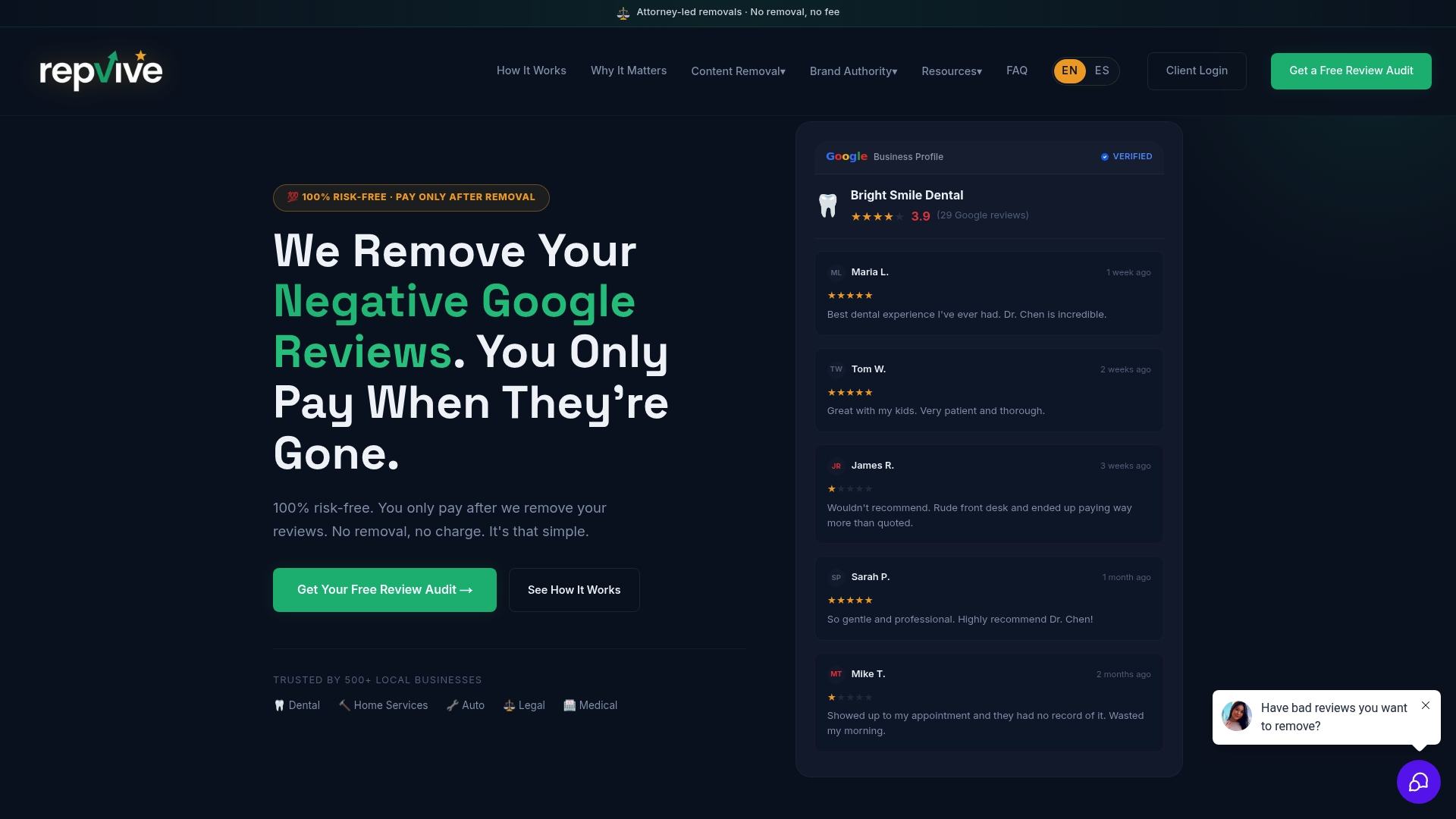
Repvive works on a no-upfront-fee model with a 99% success rate, so your firm only pays when the review is gone. If a damaging review is affecting your client pipeline, explore Repvive’s full services to see how the removal process works and what it takes to restore your firm’s standing online.
FAQ
What does ABA Model Rule 1.6 mean for online review responses?
ABA Model Rule 1.6 prohibits disclosing client information without consent, which means law firms cannot reveal case facts in public review responses even to correct false claims. Responses must remain non-specific, professional, and focused on process rather than substance.
How often should a law firm audit its online reputation?
Twice-weekly monitoring of active review platforms combined with a full monthly audit of NAP consistency and review trends is the recommended cadence for most firms.
Can a law firm ask clients to leave reviews?
Yes, asking clients for reviews is generally permitted under most state bar rules, but incentivizing reviews with gifts, discounts, or other benefits is prohibited. Requests must be honest and voluntary.
When does Google remove a negative review?
Google removes reviews only when they violate its content policies, such as spam, fake engagement, harassment, or off-topic content. A review being unfair or inaccurate is not sufficient grounds for removal without a documented policy violation.
What is the biggest risk in responding to negative reviews publicly?
The biggest risk is breaching client confidentiality by including case-specific details in a public response. Firms should use scripted, non-specific templates reviewed by ethics counsel to avoid bar complaints.