Lawyer Led Blackmail Review Removal for Owners, No Upfront Fee
Lawyer Led Blackmail Review Removal for Owners, No Upfront Fee ! Decorative title card illustration Never pay a reviewer threatening to post or keep a negative review online.
Lawyer Led Blackmail Review Removal for Owners, No Upfront Fee
Never pay a reviewer threatening to post or keep a negative review online. Document every message and timestamp, flag the review to the platform under its policy for fake or extortion-based content, and report explicit threats to local law enforcement. If the poster won’t back down or you can’t identify them, an attorney-led removal service can pursue the platform and legal channels directly, without you paying anything upfront.
TL;DR:
- Extortion reviews often demand payment or services in exchange for deleting or not posting reviews, differentiating them from genuine complaints.
- Visual evidence, clear documentation, and timely reporting within 72 hours increase chances of successful removal on most platforms.
- Filing legal claims or sending cease-and-desist letters is often necessary when platforms refuse to act on blatantly false or extortion-related reviews.
- An attorney-led removal service charges only if the review is successfully removed and is ideal for ongoing threats or anonymous posters.
- Reporting methods vary across platforms, with Google offering policy-specific flagging and legal routes, while others like Yelp and TripAdvisor require strong evidence and structured complaints.
Table of Contents
- How Do You Recognize Review Blackmail Versus a Legitimate Complaint?
- What Should You Do in the First 24 to 72 Hours?
- How Do You Report and Escalate on Each Platform?
- What Legal Options Exist If the Platform Won’t Act?
- What If the Review Can’t Be Removed?
- Why Attorney Involvement Changes the Outcome
- Get Attorney-Led Removal Without Paying Upfront
- Where to Verify These Steps Yourself
- Sources
- FAQ
How Do You Recognize Review Blackmail Versus a Legitimate Complaint?
Extortion has a specific fingerprint: someone demands money, free services, or a refund in exchange for deleting or not posting a review. That demand alone separates a criminal act from an unhappy customer venting about slow service. A one-star review complaining about cold food is protected opinion. A message saying “pay me $500 or I post this everywhere” is a crime.
Coordinated fake reviews leave patterns too. Watch for:
- Multiple new or reused accounts posting nearly identical wording within hours of each other
- A demand for payment, product, or service sent through email, text, or DM before or after the review goes live
- Factual claims that are objectively false (wrong dates, services never rendered, an employee who doesn’t exist) rather than subjective complaints
- Reviewer profiles with no history, generic photos, or accounts created the same week
Only false statements of fact can support a defamation claim. Genuine opinions, even harsh ones, generally can’t be removed on legal grounds.
What Should You Do in the First 24 to 72 Hours?
Speed matters here, but so does order. Skipping steps to “just get it down” can cost you leverage later.
- Don’t respond to the demand. Paying or negotiating confirms the extortion works and often invites repeat attempts from the same person or others who hear about it.
- Capture everything. Screenshot the review, the reviewer’s profile, and any messages, including full timestamps and URLs. Export texts or emails as PDFs rather than relying on your phone’s photo roll.
- Store evidence somewhere safe. Keep a dated backup folder, separate from your regular files, noting when and how each piece was collected.
- Post one neutral public reply, if any. A short, factual response (“We have no record of this customer’s visit”) is enough. Long rebuttals or accusations online can be used against you later.
- File your platform report the same day. Delays reduce your odds since trust-and-safety teams often weigh how fresh and specific a report is.
Pro Tip: Name the extortion attempt explicitly in your report language (“this reviewer demanded payment to remove this post”) rather than just calling the review “unfair.” Platforms triage extortion complaints differently from generic disputes.
How Do You Report and Escalate on Each Platform?
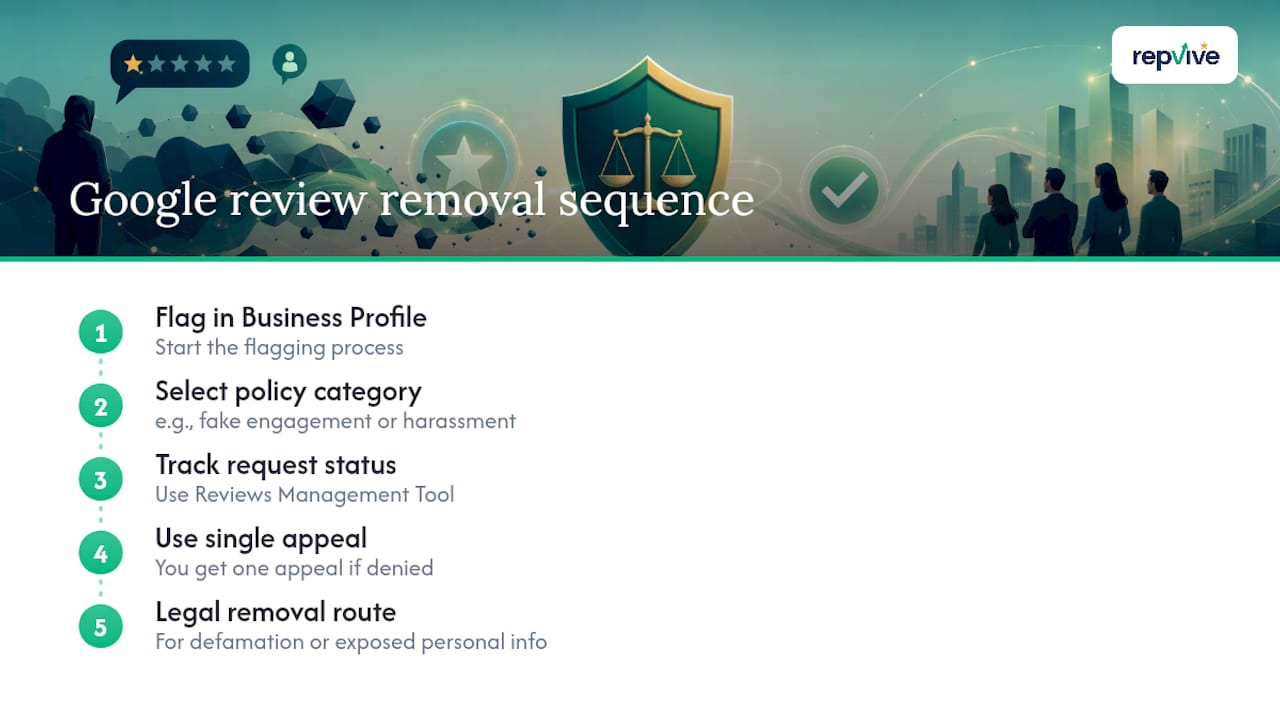
Google’s process starts by flagging the review directly from your Business Profile, then choosing the specific policy category that fits, such as fake engagement or harassment, rather than a generic “inappropriate” tag. Google’s Reviews Management Tool lets you track the status of that flag, and you get one appeal if the first request is denied. For content that’s clearly defamatory or exposes personal information, Google also offers a separate legal removal process that can accept a court order directly.
Yelp, TripAdvisor, Facebook, and Booking.com each run their own review integrity teams with different appetites for removal. All of them want the same core evidence: the exact offending text quoted, proof the reviewer wasn’t a real customer (booking records, appointment logs, POS receipts), and clean screenshots with visible dates.
A well-built report reads like a short legal memo rather than a complaint. State the policy category up front, quote the violating language, and attach one organized file of evidence instead of scattered screenshots, since trust-and-safety teams triage cleaner packets faster.
Expect platforms to take anywhere from a few days to a few weeks to respond, and understand that many negative but technically honest reviews simply won’t qualify for removal no matter how unfair they feel.
What Legal Options Exist If the Platform Won’t Act?
Platforms like Google and Yelp are generally shielded from liability for what users post, under Section 230, which means they’re not legally obligated to remove a review just because you complain about it. That’s exactly why pursuing the poster, not just the platform, often becomes necessary.
Your options escalate roughly in this order:
- Cease-and-desist letter. A formal demand to retract the review or stop the extortion attempt, often enough to spook an anonymous poster into deleting the content themselves.
- John Doe subpoena. If the poster is anonymous, an attorney can petition a court to compel the platform or an ISP to disclose registration data or IP logs, though courts weigh anonymous speech rights against your need to identify the poster.
- Small claims or defamation litigation. You’ll need to prove the statement was false, presented as fact rather than opinion, and caused measurable harm. Statutes of limitations vary by state, so timing matters.
- Court order for removal. Once a judge rules content defamatory, platforms typically honor that order and remove the content promptly, making it one of the more reliable levers available.
Litigation costs real money and can draw more attention to the review than ignoring it would have. Weigh that against how much damage the review is actually doing before filing suit.
What If the Review Can’t Be Removed?
Some reviews survive every flag and every legal letter. When that happens, suppression becomes the practical fallback: publishing owned content, earning local press mentions, and optimizing your Google Business Profile and website so the negative link drifts off page one of search results. This runs alongside, not instead of, your removal efforts.
- Publish fresh, keyword-relevant content about your business regularly to strengthen your own search footprint
- Actively collect new reviews from verified customers to dilute the visibility of the old one
- Set up simple monitoring alerts so a second attack gets caught within hours, not weeks
- Expect suppression to take weeks to months, not days, since it depends on ongoing content and citation work rather than a single takedown request
A tool like RepWatch can flag a suspicious new review the moment it posts, which matters more than people expect once you’ve already been targeted once.
Why Attorney Involvement Changes the Outcome
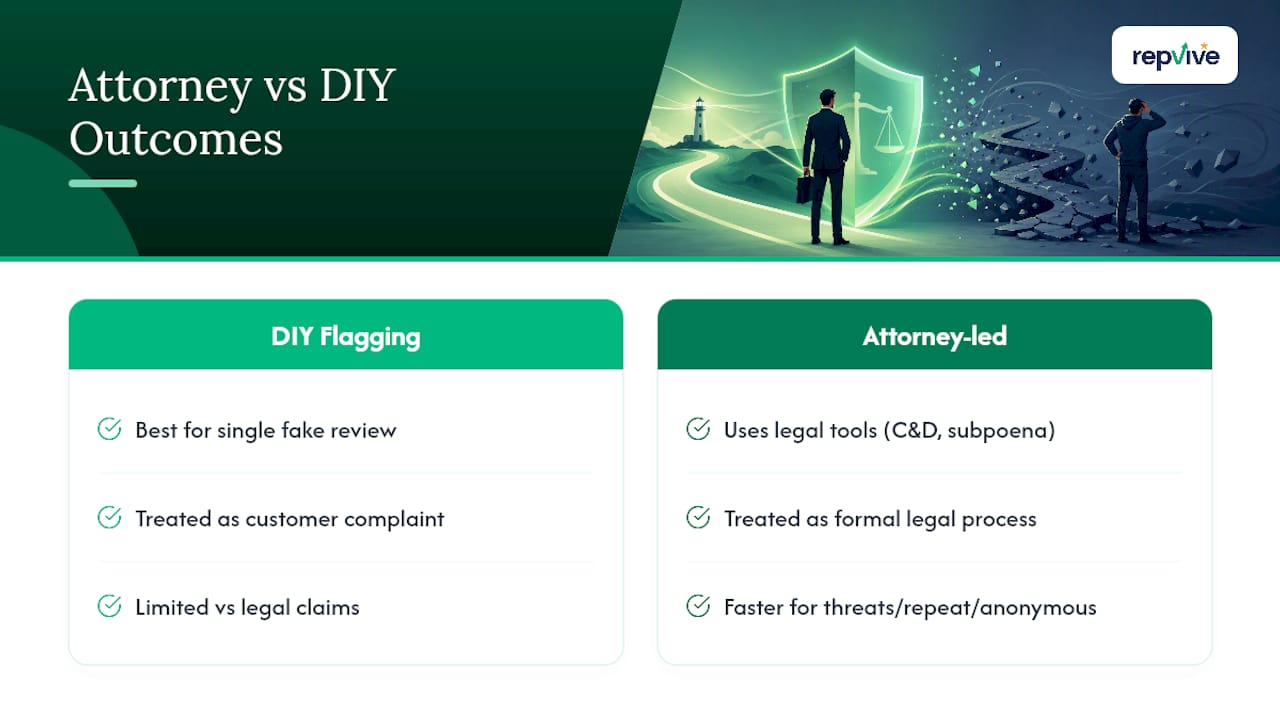
Most business owners treat review flagging like a customer service task. It isn’t. Extortion and defamation sit inside the legal system, and platforms respond differently to a legal claim than to a business owner’s frustrated complaint. A cease-and-desist letter or subpoena request carries weight a flagged review never will.
That’s the real value of an attorney-led model: it turns a stalled dispute into a formal legal process the platform can’t easily wave off. DIY flagging still makes sense for a single, clearly fake review. Once threats, repeat attackers, or anonymous posters enter the picture, legal counsel usually gets faster results than another round of appeals.
— Jason
Get Attorney-Led Removal Without Paying Upfront
An attorney-led removal service is built for exactly the scenario this article covers: a review that won’t come down through normal channels because it’s tied to extortion, coordinated fake accounts, or an anonymous poster hiding behind a platform’s own rules. Instead of generic flagging, attorneys draft a customized legal claim for each review and push it through direct platform and legal channels, with a real-time dashboard so you can track exactly where your case stands.
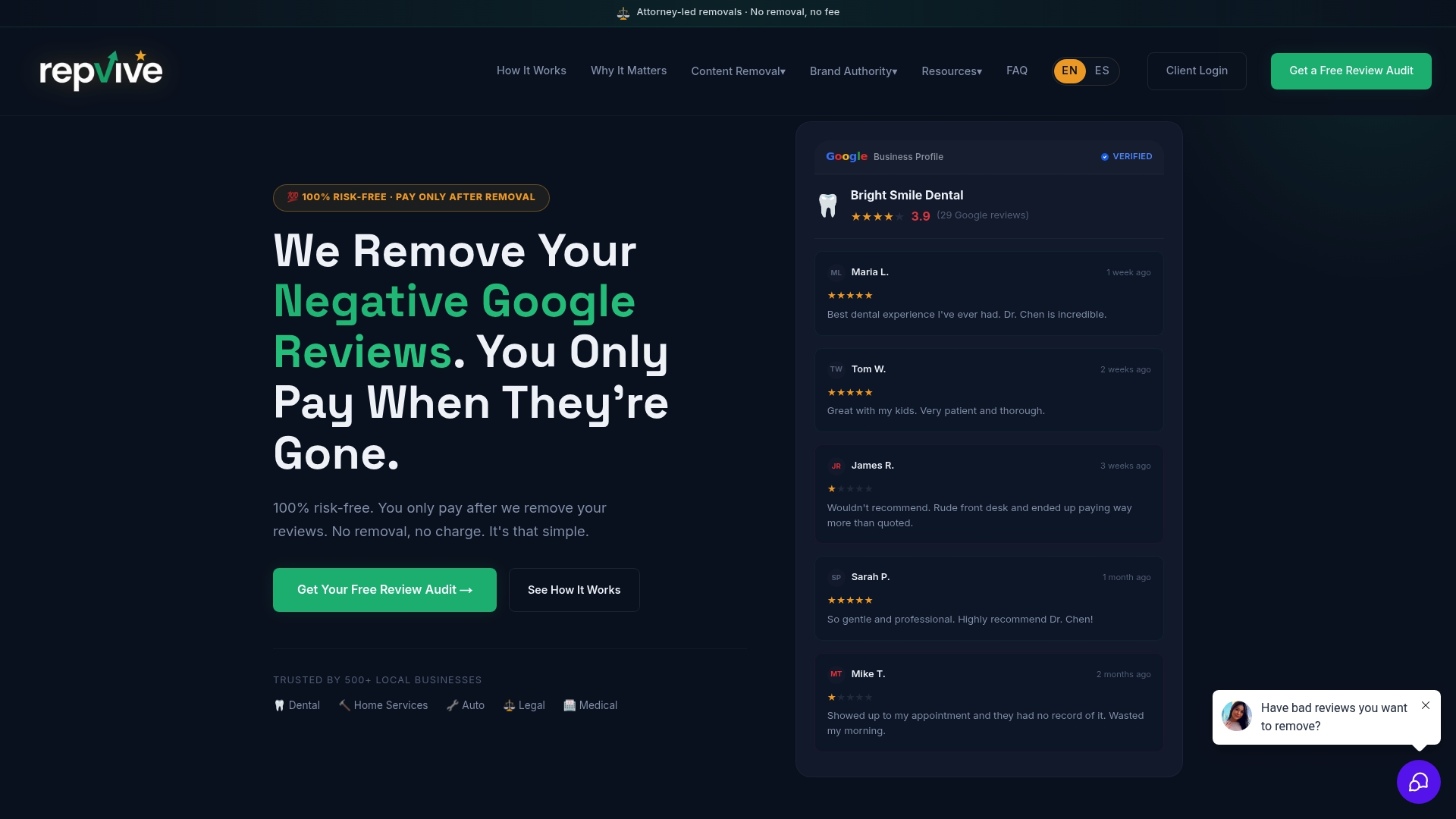
You pay only when a review is actually removed. There’s no retainer, no upfront fee, and no need to hand over your account credentials. That model makes the most sense once you’re dealing with ongoing extortion, a reviewer who won’t stop, or a poster you can’t identify on your own; single, easily-flagged fakes are still worth trying yourself first. Repvive covers Google, Yelp, TripAdvisor, Trustpilot, BBB, and more than 20 other platforms through its review removal services, and if you run a restaurant, medical practice, or contracting business, industry-specific guidance is available for restaurants, contractors, and medical providers. Start with a free Google Business Profile audit to see which reviews on your profile qualify for removal before you commit to anything.
Where to Verify These Steps Yourself
Before acting, review Google’s Business Profile reporting guidelines and its legal removal process directly. For threats involving payment demands, file a report with the FBI’s Internet Crime Complaint Center as well as local police.
This article is general information, not a substitute for advice from a qualified lawyer. Consult a qualified legal professional about your own circumstances before acting on anything here.
Sources
- Report inappropriate reviews on your Business Profile - Google Business Profile Help
- Section 230
- How to remove defamatory content from Google in 2026
- How to remove bad reviews from Google
FAQ
Is It Illegal to Remove Negative Reviews?
No, removing a review isn’t illegal on its own. What’s illegal is the extortion behind it, demanding money to take a review down, or filing fraudulent takedown requests to erase a truthful, non-defamatory complaint.
Can a Bad Review Be Removed?
Yes, but only if it violates a platform’s specific policy category (fake engagement, harassment, extortion) or contains a false statement of fact that a court finds defamatory. A negative but honest opinion typically won’t qualify for removal.
How Do I Get a Review Removed?
Flag it through the platform’s official reporting tool with the correct policy category, quoted offending text, and supporting evidence like booking records. If that fails, an attorney-led service such as Repvive can escalate through legal and direct platform channels on a pay-per-removal basis.
How Do I Get a Slanderous Google Review Removed?
Document the false factual claims and file through Google’s legal removal process, which accepts court orders for defamatory content. A cease-and-desist letter or a defamation claim against the poster often precedes that step.