How Reputational Harm Is Measured: A Business Guide
Reputational harm is defined as the measurable decline in a company’s financial performance, stakeholder trust, and public perception following a damaging...


Reputational harm is defined as the measurable decline in a company’s financial performance, stakeholder trust, and public perception following a damaging event or sustained negative exposure. Business owners often treat reputation as a feeling rather than a figure, but the field of reputational risk assessment has moved well beyond gut instinct. Today, analysts quantify reputation loss through financial capital shifts, social capital erosion, and market share changes. Understanding how reputational harm is measured gives you the ability to act before a single bad review becomes a business crisis.
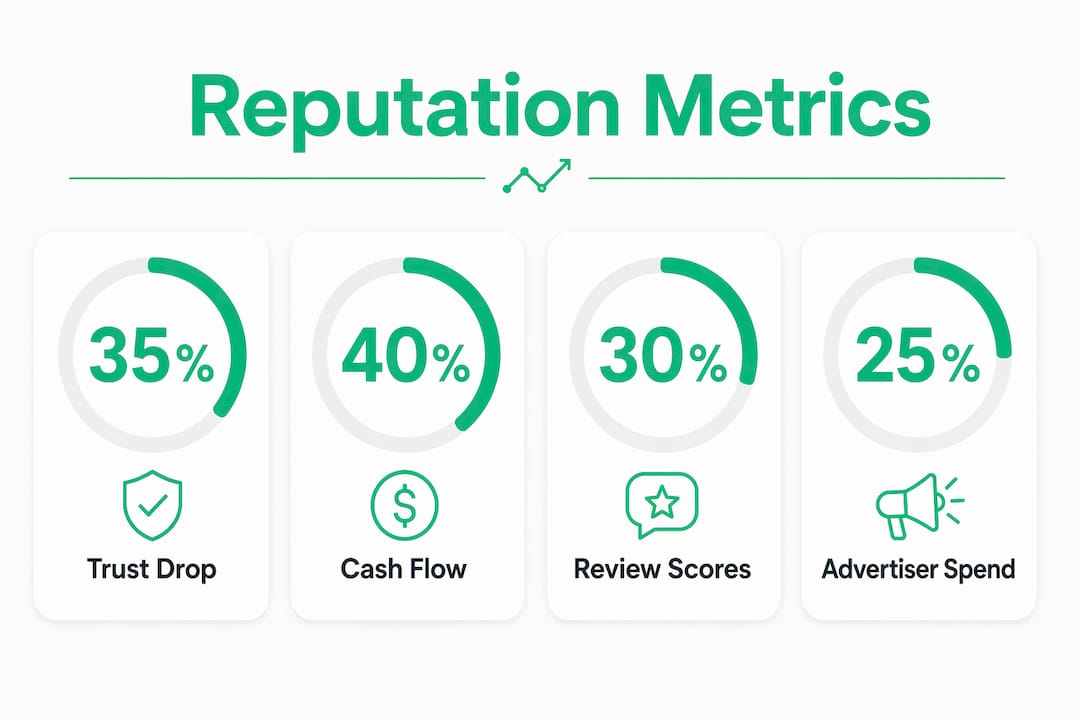
How reputational harm is measured: key metrics and indicators
Reputational harm measurement combines quantitative financial signals with qualitative trust data to produce a complete picture of damage. No single number tells the full story. The most reliable assessments use multiple indicator types tracked over time.
Financial indicators are the clearest starting point:
- Lost revenue tied directly to the incident period
- Increased operating costs from crisis response, legal fees, or regulatory fines
- Shareholder value change measured against a pre-incident baseline
- Customer acquisition cost increases as trust erodes
Trust metrics add a behavioral layer. The Trust Score framework measures trust on a 0, 100 scale, with TrustDrop% defining the decline from a pre-incident baseline. That decline is adjusted by industry-specific lambda coefficients, which weight the severity of trust loss differently depending on your sector. A healthcare business, for example, carries a higher lambda than a retail brand because patient trust is harder to rebuild.
Sentiment analysis metrics round out the picture:
- Media sentiment velocity: how fast negative coverage is spreading
- Net sentiment score: the ratio of positive to negative mentions
- Customer review ratings across Google, Yelp, and industry-specific platforms
- App store rating deltas and refund rates per 10,000 transactions
Reputational dashboards should track KPIs including DAU/MAU changes, advertiser spend shifts, and regulatory flags alongside sentiment data. These metrics give you a real-time view of where damage is accelerating.
Pro Tip: Never rely on a single metric. A drop in your Google review average means more when it coincides with a spike in refund requests and a decline in direct website traffic. Corroborating signals confirm real damage.

How do valuation models and scenario analysis measure reputation loss?
Reputation is a material financial asset that belongs inside your valuation model, not in a footnote. Modern discounted cash flow (DCF) models adjust projected revenue and margins downward when reputational risk is elevated. The mechanism works through the discount rate.
Here is how the process typically unfolds:
- Establish a baseline valuation using standard DCF assumptions before any reputational event.
- Identify the trust erosion severity using a Trust Score assessment and financial indicators.
- Apply a discount rate uplift. In severe trust erosion cases, discount rates increase by 200, 500 basis points, reflecting the higher return investors require compensating for added risk.
- Run scenario analysis. Companies assign probability and financial impact to multiple reputational scenarios, then weight each outcome to produce an expected value. This gives boards a range of outcomes rather than a single fragile forecast.
- Apply event study methodology. Track stock price reactions in the days following a reputational incident to isolate the market’s direct response.
- Review ESG ratings. Environmental, Social, and Governance scores function as leading indicators of reputational resilience and affect institutional investor appetite.
The financial stakes are significant. Short-term free cash flow can be cut in half after a major reputation incident. Discounting at a near-20% weighted average cost of capital (WACC) can reduce enterprise value by 50% under the most severe scenarios.
| Scenario severity | Discount rate uplift | Estimated enterprise value impact |
|---|---|---|
| Mild trust erosion | 50, 100 basis points | 5%, 15% reduction |
| Moderate trust erosion | 100, 200 basis points | 15%, 30% reduction |
| Severe trust erosion | 200, 500 basis points | Up to 50% reduction |
These figures are not theoretical. They represent the real cost of ignoring reputation as a balance sheet item.
What role do online reviews play in assessing reputational damage?
Online reviews are one of the earliest and most visible signals of reputational damage. A shift in your Google Business Profile rating or a surge in one-star reviews on Yelp often precedes the financial impact by weeks. That gap is your window to act.
Negative shifts in customer review scores and social media mentions frequently precede financial impacts. This means review data is a leading indicator, not a lagging one. Businesses that monitor review platforms in real time catch problems before they compound.
Effective assessment of online reputation requires:
- Multi-platform aggregation. Pull ratings from Google, Facebook, Yelp, Glassdoor, and industry-specific directories into a single view. A drop on one platform may signal a coordinated attack or a genuine service failure.
- Volume and velocity tracking. A sudden spike in negative reviews over 48 hours is a different threat than a slow decline over six months. Velocity tells you whether you face a crisis or a trend.
- Sentiment classification. Categorize reviews by theme: product quality, customer service, pricing, or staff behavior. Themes reveal the root cause, which determines the right response.
- Competitor benchmarking. Your 3.8-star average means little without knowing your industry median. Context determines whether you have a problem or a perception gap.
Pro Tip: Set a Google Alerts notification for your business name and pair it with a weekly review audit across all platforms. Catching a negative review spike within 24 hours gives you the best chance of a measured, effective response.
The connection between online sentiment and financial outcomes is direct. A Glassdoor review removal need or a flood of fake Google reviews does not just hurt your feelings. It changes how prospective customers, partners, and lenders evaluate your business.
How should businesses operationalize reputational harm measurement?
Measuring reputation once after a crisis is not a strategy. Ongoing measurement requires a structured system that catches problems early and routes them to the right decision-makers fast.
-
Build an observability layer. Track both the magnitude and velocity of sentiment changes. Real-time alerts allow rapid response within 24, 72 hours of a damaging spike. Average 30-day sentiment scores mask urgent threats that develop overnight.
-
Adopt a governance framework. The DRRIe™ framework provides structured detection, risk mapping, and pre-built response architectures. It reduces both the impact of reputational damage and the time needed to recover. Governance frameworks convert reactive firefighting into a repeatable process.
-
Build a multi-indicator trust index. A board-level trust metric aggregates refund rates, engagement data, sentiment scores, and legal exposure into a single dashboard number. This gives leadership a clear signal without requiring them to interpret raw data.
-
Establish escalation protocols. Define clear thresholds: what sentiment velocity or review score drop triggers a management review? What triggers a public response? Protocols prevent both overreaction and dangerous delay.
-
Apply reputational due diligence to partners. Insufficient assessment of a partner’s trust profile, narrative conflicts, and legacy controversies causes costly post-deal failures. Your partner’s reputational problems become yours the moment you sign.
-
Avoid single-point assessments. Credible reputational risk assessment requires repetition, consistency, and escalation across multiple signals. One negative review or one media mention is not a crisis. A pattern of corroborating signals is.
The businesses that manage reputation well treat it the same way they treat cash flow: with regular reporting, clear ownership, and defined response procedures.
Key Takeaways
Reputational harm is most accurately measured by combining financial valuation adjustments, trust score metrics, and real-time sentiment monitoring into a single integrated system.
| Point | Details |
|---|---|
| Use multiple indicators | Combine financial, trust, and sentiment data rather than relying on a single metric. |
| Apply valuation models | DCF adjustments and scenario analysis translate reputation loss into dollar figures for board decisions. |
| Monitor reviews in real time | Online review velocity is a leading indicator of financial impact, not a lagging one. |
| Build governance protocols | Frameworks like DRRIe™ convert reactive crisis management into a repeatable, structured process. |
| Assess partners proactively | Third-party reputational due diligence prevents costly surprises from inherited risk. |
Why most businesses measure reputation too late
The most common mistake I see business owners make is treating reputation measurement as a post-crisis activity. They pull their Google review average after a bad month, notice the drop, and then scramble. By that point, the financial damage is already baked in.
The businesses that come out ahead are the ones that treat reputation the way a CFO treats accounts receivable: tracked weekly, flagged when it moves, and tied directly to revenue projections. I have seen companies with strong products lose significant market share not because their offering got worse, but because they let a pattern of unaddressed negative reviews compound unchallenged for six months.
The other mistake is over-indexing on a single data point. One bad review does not define your reputation. But five bad reviews in two weeks, combined with a spike in refund requests and a drop in new customer inquiries, absolutely does. The signal is in the pattern, not the incident.
My honest view is that most small and mid-size businesses need two things they do not currently have: a real-time monitoring system and a clear escalation protocol. You do not need a large team to build either. You need discipline and the right tools. Start with your Google Business Profile, set up alerts, and define what number triggers a response. That alone puts you ahead of the majority of your competitors.
, Jason
Repvive’s approach to reputation measurement and recovery
Reputational harm does not fix itself. Once negative reviews accumulate, they affect how customers, partners, and search algorithms evaluate your business every single day.
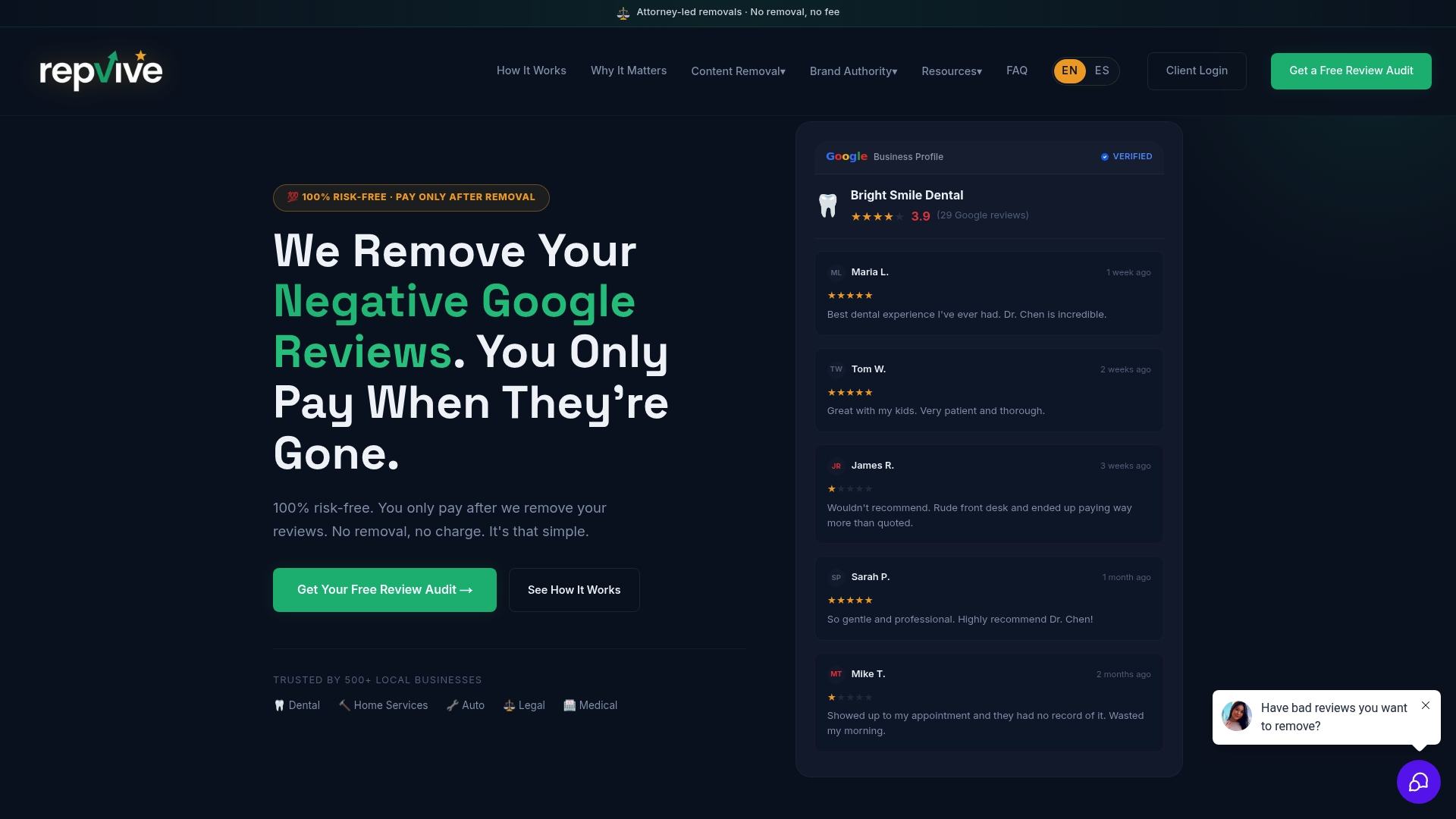
Repvive works with business owners to address the reviews that are doing the most damage. The attorney-led process targets fake, unfair, or policy-violating reviews through direct channels with Google, with a 99% removal success rate and no upfront fees. For businesses that need a broader view of their online reputation management, Repvive’s team also monitors sentiment across platforms and builds a clear picture of where your reputation stands. If you want to understand the full scope of your reputational risk and take concrete steps to address it, start with Repvive.
FAQ
What is the difference between reputation risk and reputational harm?
Reputational risk is the potential for damage before it occurs. Reputational harm is the measurable impact after a damaging event has already affected trust, revenue, or public perception.
How do online reviews affect a company’s reputation score?
Negative shifts in review ratings and review volume on platforms like Google and Yelp are leading indicators of financial damage, often preceding revenue loss by several weeks.
What is TrustDrop% and how is it calculated?
TrustDrop% measures the percentage decline in a company’s Trust Score from its pre-incident baseline, adjusted by industry-specific lambda coefficients that weight severity by sector.
How quickly should a business respond to a reputation incident?
Effective reputation monitoring enables response within 24, 72 hours of a damaging spike. Delays beyond that window allow negative sentiment to spread and compound.
Why is scenario analysis used in reputational harm assessment?
Scenario analysis assigns probability and financial impact to different reputational events, producing probability-weighted expected values that help boards make informed risk decisions.